
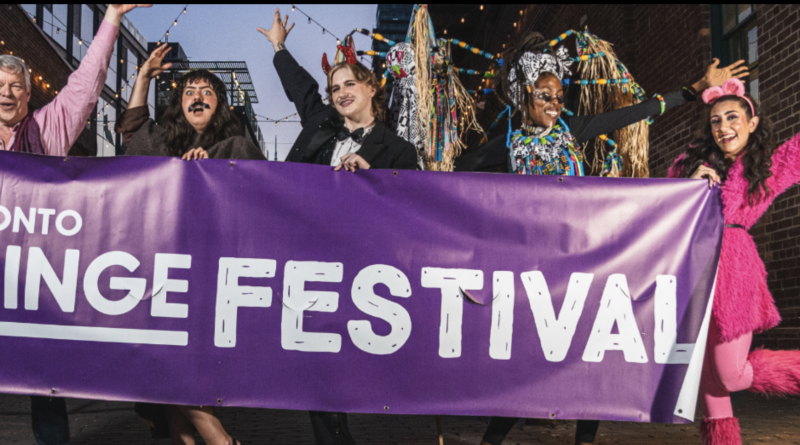
2026 Toronto Fringe Festival
2026 Toronto Fringe Festival
We will be updating this page as we watch more shows.
It’s Fringe season again! WOO HOO! I will be doing my very, very best to review as many shows as possible, giving them an honest but fair shake. No matter what I say, I applaud each show for going the distance and doing something incredibly difficult: putting on a show. As last year, I will be adding a ‘grade’ to each and every review.
A+ – A fantastic show, on my “Must See” List for the year.
A – A great show, but with a few bumps to smoothen out. Still worth seeing.
B – Has many elements of a great show, but needs work before the next production. Go into the show with an open mind.
C – May not be the best show out there, but I can appreciate their hard work and recognize the courage it takes to put on a show. Proceed with a very open mind if attending.
D – Needs a lot of work before giving it another go. Don’t give up, creating theatre is not easy!
* * * * *

War Dog
Rating: B+ (Almost an A-)
Despite its name, War Dog is not simply just a show about growing up as an army brat. It’s a brave, vulnerable introspective on how moments in our lives shape who we are, and how we see the world. This is a great example of a show that embraces the Fringe spirit, by putting storytelling at its forefront, and writer and performer Mike D. Smith does an amazing job telling his story earnestly and emotionally.
The show is a simple one in set design, and relies on gentle lighting cues, projections on a white screen, and sound effects/music to tell its tale fully. I think these are smart choices, because it really elevates and highlights Smith as a storyteller. This is also emphasized by Smith’s delivery of the script, though it was not 100% memorized. The director was in the audience to prompt him if he got lost, which happened twice, but admittedly it’s a long script. Memorizing an hour-long solo show is hard, but has been done quite effectively by other artists attempting to put on solo shows with meaningful elements of storytelling. This is a mistake I see some artists make: assuming that just because you wrote it, that you know it inside and out.
I was really quite impressed with exactly how vulnerable Smith got with the audience, unpacking his complications with his family and many layers of trauma. I appreciate the thought process of trying to wrestle with the idea that his trauma is valid, especially as a son of a soldier who went through many traumas of his own. Being a kid of the 70s, that generation has not exactly been known as a generation that has been in touch with their feelings, let alone willing to share them with an audience.
There are a few things that will elevate this show, and take it to new levels. In addition to the memorization, playing more with visuals and sounds would benefit the production. Having appropriate pre-show music, more projections of personal photos, and reducing some of the unnecessary sound effects, like the sound of kids laughing or the hockey ‘score’ sound effect would actually elevate the words more. On the flipside of that, some gentle instrumental moments in specific points of the show could also create even more feeling and emotion for us as an audience.
I should also say, this show talks about suicide and depression, mentioning the use of a gun to see how it would feel to “end it all”, but there was no content warning anywhere. That should be fixed asap.
I also felt that the show ended sort-of abruptly. Spoiler alert, in the story we learn that Mike runs away from home, and we know he connects with his family again…but we don’t know how. How did his family react to finding out he was ok? That he built a new life? How did he repair his relationship with his dad? We as an audience have invested ourselves in Smith’s story, but then it just falls with a bit of an incomplete ending. He also mentions a few times instances where he sees someone as a ‘sissy’, even saying that when he was struggling heavily with his mental health he saw God as a ‘sissy’, but we never get any resolution there either. Why make a point to use this word so boldly only to never return?
The ending ending is also a little odd. He has a beautiful moment where he speaks to the memories of his dad, his childhood dog who he loved immensely, and his 11 year old self. It was very moving and touching, but then in order to have a ‘happy ending’, we watch a slightly cringy dance routine to the ever popular wedding dance floor song, YMCA by the Village People, calling to where he lived when he first moved to Toronto as a young man with no place to go. The power of the show is in the storytelling, and the taking the audience through a lifetime of ups and downs, and unfortunately and all that work to build us up emotionally to just be let down. If he ended the show talking to the memories, and maybe having a moment to talk about how he’s thrived and survived through those memories, it would leave the audience with that wonderful feeling of true connection.
Though this show does need work, it is a wonderful example of great storytelling, and what the Fringe is made for: to empower people to tell their stories. I applaud the entire War Dog team and encourage you to see this show if you like storytelling, have a tie to living life as a child of a military parent, or someone struggling with their mental health.
* * * * *
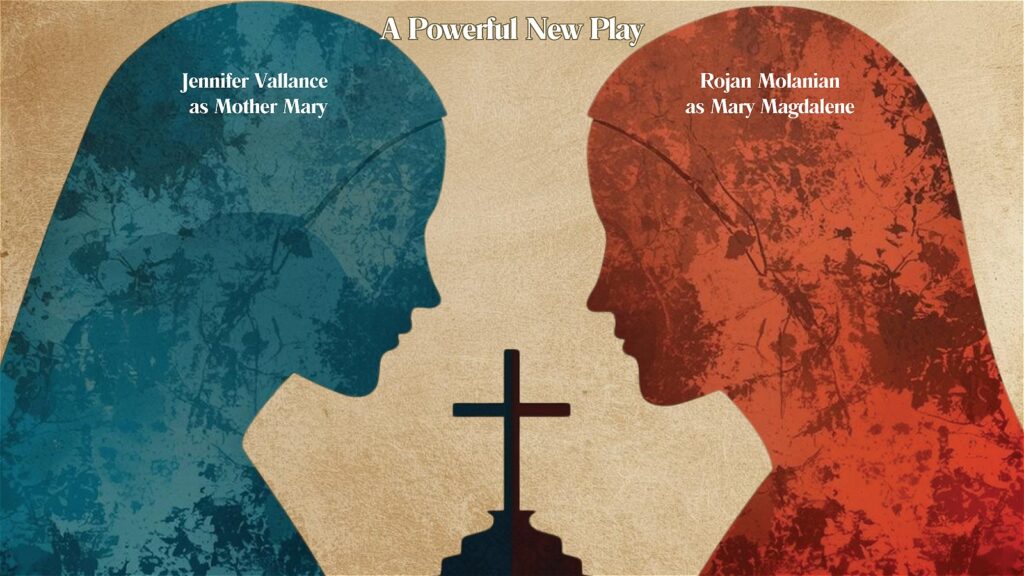
Mary, Mary
Rating: B+
On the surface, Mary Mary is a story of the most important women in the life of Jesus Christ, but deep down, it’s a story of how the efforts of women are played down and forgotten. This two hander starring Jennifer Vallance as Mother Mary, and Rojan Molanian as Mary Magdalene shows the two women at crucial moments in the final chapter of Christ’s life, up until his death. Vallance and Molanian do an incredible jon in opening up their emotions to the audience, playing these incredibly powerful women as earnestly and as passionately as possible. Mary Mary is an exploration of faith and love when faced with fear and the undeniable truth that the man they both love so deeply is about to die.
What struck me most about this piece is how the two Marys are portrayed as two halves of Jesus himself. Mother Mary being the strong, steadfast, devout servant of God represents Jesus’ divine side, and Mary Magdalene represents his human side, falling in love with his kindness and care, seeing her for who she is, not who others say she is. Mother Mary is also seen acting almost as an unmoveable stone in her faith, happy to stand by and watch her son suffer for it is ‘God’s will’, while Mary Magdalene wants to fight to spare this man his life. Two halves once again.
A lot of the directing choices felt very intentional and well thought out, especially in how the actors physically carried themselves. The contrast between Mother Mary’s slow, restrained presence and Mary Magdalene’s more chaotic, almost frantic energy really stood out and helped define their worlds without needing much explanation. The simplicity of the set also worked in the production’s favour—it felt purposeful and allowed the focus to stay on the performances and the story. That said, a few of the projection choices, like the spray-painted graffiti at the beginning, felt a bit less necessary. At times, it seemed like the production was reaching for a modern edge that didn’t always need to be there, when the strength of the piece was already in its performances and text.
Vallance’s portrayal of Mother Mary is heartfelt and grounded. For most of the play, she carries herself with the quiet strength of a woman who has spent her life living under the weight of an extraordinary calling. That restraint works well throughout much of the story. Because of that, I found myself wanting a bigger physical release when Jesus dies. Vallance’s voice is filled with grief and rage, but I wanted to see that same heartbreak reflected in her body. For most of the monologue she remains fairly still, only collapsing into tears at the very end—a choice often referred to in musical theatre as a “park and bark.”
Whether that was Vallance’s choice or a directing decision, it felt like a moment that could have gone even further. After all, Mother Mary has just watched her son be tortured and killed in front of her. The emotion is already there in the performance—I just wanted to see her body give in to that grief as much as her voice did. I think leaning into that physical breakdown could make an already powerful scene even more moving.
What I admired most about the script by Amanda Gauvin Allen and John Thomas, dramaturged by Ayesha Mansur Gonsalves, was its lyrical quality. The language is poetic and fluid, yet never loses sight of making the Marys feel like real, authentic people rather than distant biblical figures. The writers clearly approached the material with great care, balancing prose with voices that remained authentic to the characters and respectful of the source material.
That same reverence, however, also presented the play’s greatest challenge. Reimagining figures whose stories have been told and interpreted for centuries is no easy task, particularly when the goal is to honour scripture while filling in gaps in what we know about these women. I found myself appreciating the craft of the writing more than discovering something genuinely new about these women. The play reinforced many ideas that progressive and liberal Christian audiences may already recognize—particularly around the treatment of women in the Bible and the compassionate, inclusive way Jesus called his followers to love—but it did not give me a fresh perspective.
I was consistently engaged by the story and deeply respected its intentions, yet I found myself wanting a little more of a dramatic flair. As thoughtful and affirming as the play was, it never quite swept me away emotionally or theatrically. It feels strange to ask for more “entertainment” from a work that approaches its subject with such sincerity and reverence, but theatre ultimately asks to both provoke reflection and captivate an audience.
I also felt that the use of microphones in this were unnecessary and in fact distracted from the performance when levels were not correct. These actors should have been able to project and enunciate with ease in a space like the Cake Cabaret. My last critique of the show was that though I appreciate the end of the show acting as a reflection and call to action for people to live more like Christ did versus obsess over what’s been written about him, and the unfair treatment of these two iconic women, it felt just a little too preachy, and didn’t end on the note I was hoping it was going to.
Overall, I really enjoyed and appreciated Mary Mary, but they may have been preaching to the choir a little bit with me personally. Even with a few moments where I wanted the production to push the narrative or the emotions a little further, it’s still a thoughtful and carefully made tribute to two women whose true stories have been lost to history, and the men who chose what to write and accept about them. There’s a real sense of care in how the story is told, and that comes through in both the writing and the performances.
*****

Such Ado!
Rating: A
So, here’s the thing, I’m a bad theatre goer. Mainly because I’ve only seen or read a small number of Shakesphere plays. I know the gist of most of them, but still, bad thespian! However, when I heard a youth theatre group was taking a beloved Shakesphere play, and making it “gay af”, I knew I had to see it. Such Ado takes Much Ado About Nothing and drops it into the present day, swapping iambic pentameter for modern speech and looks through at the play through a fully queer lens on love, identity, and expectation. Set at a prestigious university where the battlefield has become the soccer field, the story follows Bea and Ben as they spar with words, while Claudia and Hera fall into a tender romance under the watchful (and increasingly jealous) eye of Jonathan. It’s playful, fast-moving, and very aware of its own theatricality, often breaking the fourth wall and leaning into a sense of shared space with the audience—especially in a venue like Cake Cabaret. I couldn’t believe how fast 90 minutes flew while I was watching the show, with the pacing of the show at a great rate.
There are some really smart directorial and writing choices throughout, including occasional flourishes of Elizabethan-inspired language that give the text a bit of texture and nod to its source material. However, a few performers could benefit from slowing down and articulating more clearly, especially in moments where the story is moving quickly or layered with jokes. There were unfortunately times where I caught myself straining to understand what an actor was saying, and I know some witty lines got lost in an attempt to make the pacing feel “believeable”. In a show stacked with talent, weak moments stand out like a sore thumb.
That said, the cast is genuinely strong across the board. Elise Bauman, Frances Loiselle, and Liam Kinahan are particular standouts, bringing excellent comedic timing, commitment, and a sense of joy that really lifts the production. Their performances make the world of the play feel fun, energetic, and easy to get swept up in. This is also where Such Ado shines most clearly: as an example of accessible queer theatre that feels rooted in youth, humour, and possibility.
If there’s one element that doesn’t quite land, it’s the sound design. The repeated use of the same segment of the “All the Things You Said” remix from Heated Rivalry becomes distracting over time, to the point where it starts to pull focus rather than support the action. After the first three times, I wondered to myself, “This again?” The scene transitions set to this music also came out of nowhere and felt jarringly loud, and started to water down my overall enjoyment of the show.
At its core, though, the show is doing interesting work in how it frames manipulation, expectation, and the pressure of gendered norms. The antagonistic forces in the story aren’t just individual characters, but the broader conservative and gender-normative systems they represent. These norms were displayed brilliantly by Jillian Robinson who played the staunch president of the University, who supports the school’s gender-non conforming soccer team because they make the university look good, but not her daughter’s journey as a queer woman, because of her ‘reputation’. This show has a lot to say, but at its core, Such Ado is a super cute queer love story, on stage at a time where people are trying to silence queer voices, especially when it comes to our youth. It’s a fresh, energetic take on a familiar story, and while not every element fully lands, Such Ado remains an entertaining and often very funny piece of theatre that’s easy to root for.
*****
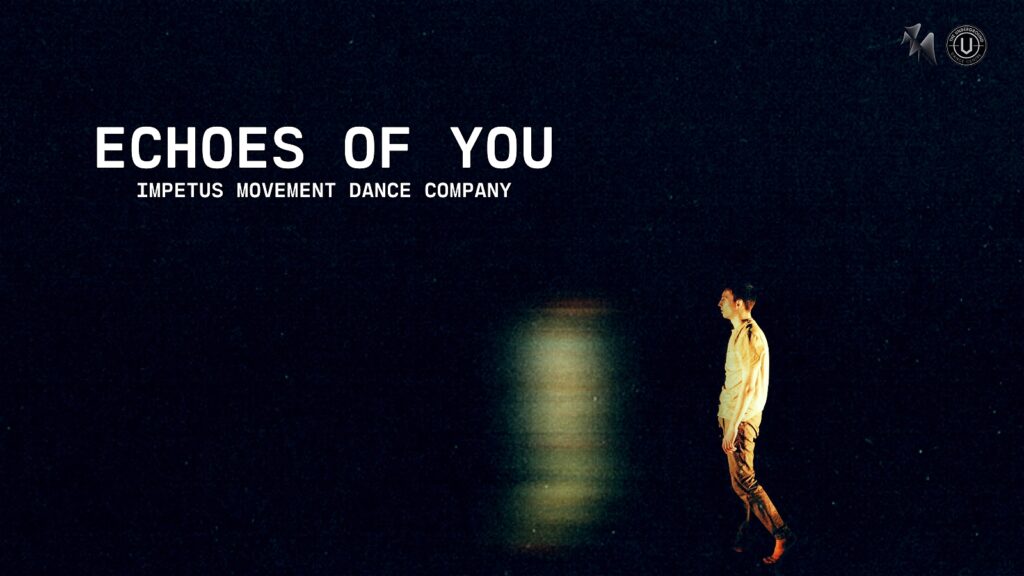
Echoes of You
Rating: A+
Helen Keller once said, “The best and most beautiful things in the world cannot be seen or even touched. They must be felt with the heart.” Echoes of You absolutely grabbed my heart, put it in a vice grip, and took it on an emotional journey that, to be frank, I wasn’t ready for—but one I felt like I desperately needed.
Before I go any further, I want to acknowledge that I attended a performance that unfortunately experienced some major technical issues, resulting in the show having to restart twice. As someone with a lot of performance and production experience, I know just how frustrating that can be, so huge kudos to the entire cast and crew for handling it with incredible professionalism. They never let it shake them for a second.
Echoes of You is a contemporary dance work by Dawson Lloyd that explores the lasting impact of human relationships and the emotional echoes people leave behind. Through expressive movement, the piece examines love, loss, grief, vulnerability, and connection, inviting us as audience members to reflect on how the people we encounter continue to shape who we are, even long after they’re gone.
This production takes the audience through a whirlwind of emotions: pain, frustration, anger, remorse, joy, and everything in between. Inner conflict, rejection, loneliness, acceptance, love, and healing are all brought to life before our eyes, all without a single word being spoken.
I think the brilliance of this piece lies in the fact that dance becomes a canvas onto which every audience member can project their own experiences. We interpret each movement through our own lens, making the emotional journey deeply personal. Those emotions are brought to life through raw, vulnerable, and deeply expressive performances from Chelly Li, Tyler Horvath Thompson, Vailea Parris, Mackenzie Grantham, Déjà Shuturma, Rosemary Traitses, and creator Dawson Lloyd. Not only is every performer technically exceptional, but they fully embody every emotion the work asks of them. There isn’t a single moment that feels manufactured or forced.
One of the things I always look for in contemporary dance is a balance of movement quality, and Echoes of You achieves that beautifully. The choreography effortlessly shifts between intensely sharp phrases and fluid, almost weightless movement. The attention to detail is remarkable—from subtle isolations in the hands and ankles, to the intentional use of facial expression, to the awareness of lines, shapes, and silhouettes. Every movement feels deliberate.
And I have to say—considering there are as many as seven dancers on stage at once, all performing physically demanding choreography, that stage felt far too small. Somehow, they made it work. In fact, it made the performance even more impressive. It spoke volumes about the trust these dancers have in one another and the meticulous rehearsal process that must have gone into this production. Their timing and synchronicity were flawless—a testament to countless hours of hard work. There were moments where dancers were literally being thrown around like ragdolls, and every lift, catch, and fall was executed with absolute precision. If that doesn’t demonstrate trust, I don’t know what does.
The sound design, also by Dawson Lloyd, served as the perfect counterpart to the choreography. The music was at times loud and overwhelming, but always intentionally so, heightening the emotional intensity of each section. It pulled us even deeper into the work. That said, I can see how some audience members might find it a little overpowering, but for me, it only strengthened the experience.
Now, I don’t want to create unrealistic expectations for future audiences, but I genuinely feel like I have to say this: I’ve seen a lot of dance productions over the years as a reviewer, and I can confidently say that Echoes of You ranks among the very best I’ve ever experienced. There was something about this production that connected with me on an incredibly deep level, and it had me fighting back tears before I even realized it.
If you love contemporary dance—or simply want to witness artists performing at the absolute top of their craft—Echoes of You is a must-see. In fact, I’m convinced this cast represents some of the finest contemporary dancers working in Canada today.
*****
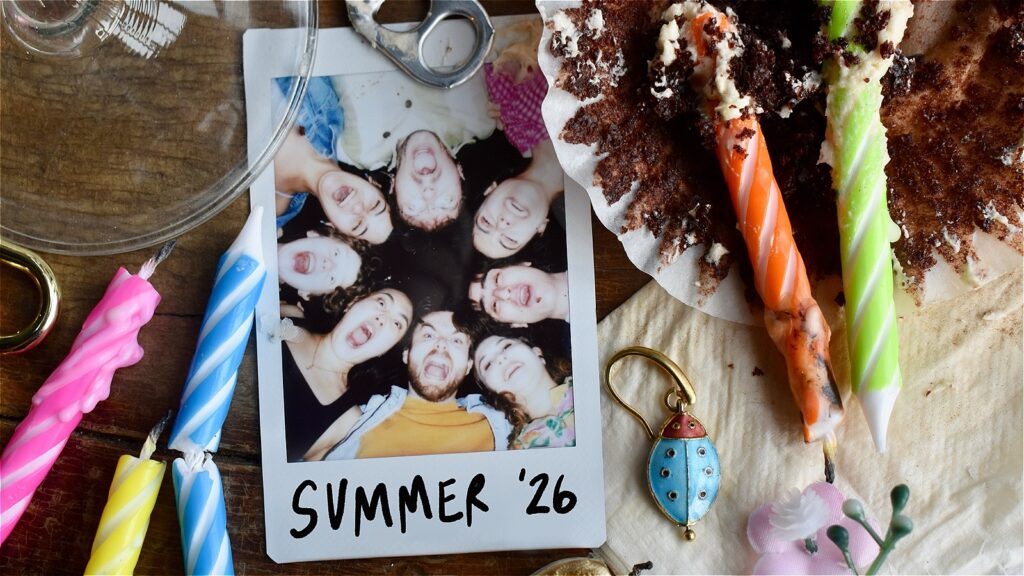
CUSP
Rating: C
One of my favourite things about the Toronto Fringe is getting to watch artists grow. Every year there are performers whose names start becoming familiar, and it’s exciting to see them tackle new projects with new collaborators. That was exactly my experience with CUSP.
What I loved most about CUSP, straight up, were the performers. I’ve seen a good chunk of this cast in previous Fringe productions—most notably one of my favourites from last year, The Ensemble. So I was genuinely excited to see them tell a story about youth, friendship, and the messy, uncertain process of growing up and, sometimes, growing away from the people you love most. This is a seriously talented cast, and every performance feels sincere, committed, and full of heart.
“What happens when you have your whole life ahead of you and anything is possible? You panic about the onslaught of regret that may one day come for you if you make the wrong choice, of course. Eight twenty-somethings have spent the summer at a cottage where boredom is calcifying, romantic tensions are mounting, family dynamics are sharpening, and no one really knows what the f*ck they are going to do next.”
I laughed more than a few times throughout the show because I saw myself—and a very specific group of friends—in these characters. Acting ridiculous, baking treats, breaking into random songs for absolutely no reason… it all felt wonderfully recognizable. The chemistry between the cast is one of the production’s greatest strengths, and you completely buy that these people have years of shared history together. There’s also an incredibly inventive movement sequence built around a card game that is choreographed with remarkable precision. It runs just a touch longer than it needs to, but it’s so creative that I honestly didn’t mind spending time with it.
Unfortunately, where CUSP began to lose me was in its script.
The best way I can describe the experience is with a television analogy. Imagine someone sits you down to watch Season 3, Episode 5 of a coming-of-age drama. Everyone else already knows the characters, their histories, and the complicated dynamics between them—but you’re just trying to figure out who’s dating whom, who’s related to whom, and why everyone seems upset. That’s how I felt for much of CUSP.
There are a lot of characters onstage, and it’s clear the writer/director wants each of them to have their own meaningful arc. Admirably, everyone gets moments to shine. The trade-off, however, is that the audience never really has a central character to hold onto. Without that anchor, it’s difficult to invest in the emotional stakes because we’re constantly trying to catch up.
As the show progresses, we discover that this isn’t simply a friend group. Hidden within the ensemble are siblings, cousins, a married couple, infidelity, long-standing resentments, complicated family dynamics, and friendships under strain. Individually, many of these ideas are compelling. Collectively, they become overwhelming. By trying to explore so many relationships at once, the production never gives any single storyline enough room to fully breathe. Just as one conflict begins to gain momentum, we’re whisked away to another.
The opening sequence also left me puzzled. The cast enters wearing printed masks of their own faces, vibrating and dancing to club music before everything cuts to black. Moments later, the lights come back up and they’re casually playing Monopoly. I suspect the masks are meant to symbolize the personas we wear or the versions of ourselves we present to others, but because that visual language isn’t revisited in a substantial way, the moment feels disconnected from the rest of the piece. It certainly caught my attention—I just wasn’t sure what I was meant to take away from it.
What’s frustrating is that there’s a version of CUSP that I think really works. Strip away a few of the competing storylines, give the audience one emotional through-line to follow, and let these wonderfully natural performers do what they clearly do best: exist together. Their chemistry is undeniable, and when the show slows down enough to simply let these characters be with one another, it’s genuinely engaging.
I truly believe this cast, crew, and creative team have an exciting future ahead of them. Even though this particular production didn’t fully land for me, I’d much rather see artists take ambitious swings than play it safe. There’s an incredible amount of talent on that stage, and this feels less like a finished destination and more like an important stepping stone. I sincerely hope this collective continues making theatre because I’ll happily be there to see what they create next.
Break legs for the rest of the Fringe run. I have a feeling this won’t be the last time many of these names appear in a program, and I’m looking forward to following where they go from here.
*****

Ooga Chaka
Rating: A+
It’s shows like Ooga Chaka that remind me why I love the Fringe so much. I mean, where else are you going to see a play about two prehistoric cave painters accidentally discovering live theatre? It’s the kind of wonderfully ridiculous premise that could only thrive at the Fringe, and somehow, against the odds, it works brilliantly.
The production centres around Bungu (Ben Yoganathan) and Kiki (Rachel Cucheron) are two prehistoric cave painters who spend their days painting the exact same repetitive murals, all depicting the story of Groog, the village’s legendary hero. Their money-hungry (or, in this case, pebble-hungry) boss (Nicholas Eddie), appropriately named Rock, has sucked every ounce of joy out of creating art, turning something that should be inspiring into little more than factory work. Fed up with the endless cycle, the pair quit and decide to take their paintings “off the wall,” accidentally inventing an entirely new art form: theatre. In the process, they create a platform for Rock’s loyal assistant (Kole Durnford) to find an opportunity to have the attention and the spotlight he craves. As the play progresses however, we see how the impact of fame and money can wreak havoc on those just trying to make art.
As absurd as that premise sounds, Ooga Chaka ends up being a genuinely heartfelt love letter to theatre itself. It celebrates everything that makes this art form so special while poking fun at the industry and egos surrounding it. The show lovingly satirizes pretentious artists, demanding producers, and the never-ending pursuit of success. At its heart, though, it’s about something much simpler: people who just want to create something meaningful and be heard. It explores how easy it is for artists to lose themselves while chasing recognition, wealth, or fame, and gently reminds us why they started creating in the first place.
The performances in this show are incredible across the board, but I wanted to take a moment and shout out the ensemble. Ben Kopp, Margot Greve, and Ruaridh MacDonald show what it means to be an outstanding member of an ensemble. Having very little in terms of lines, they steal the show with their physical humour, and commitment to being the best dang cave people they can be.
This script is honestly quite a delight. As a person who’s tried to tried comedy before (and failed miserably) I can really appreciate the simple, uncomplicated jokes. Ethan Zuchkan’s script takes experiences of every creative trying to make art, and maybe even a living in the arts, and weaves them together into a funny, but relatable piece. The comedy comes from an earnest, genuine place, and doesn’t need to be forced (thank goodness).
Ooga Chaka is exactly the kind of show Fringe was built for: wildly imaginative, genuinely funny, and bursting with creativity. But more than that, it’s simply a great piece of theatre. Whether you’re a lifelong theatre nerd or someone just looking for a good laugh, there’s so much to enjoy here. By the end, I left with a huge smile on my face, reminded of why creating art and sharing it with an audience is such a magical thing in the first place.
*****
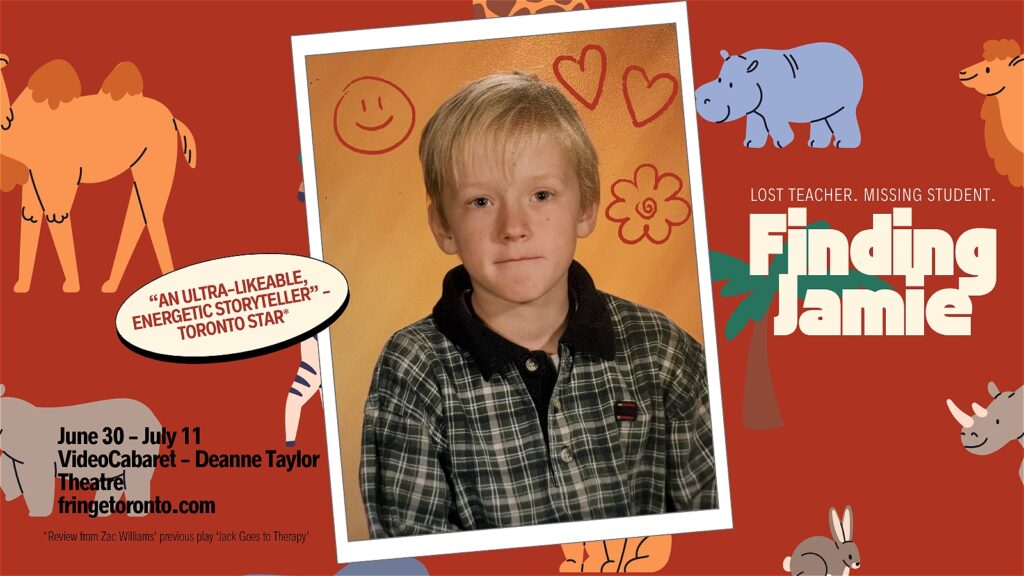
Finding Jamie
Rating: B+
There are certain shows at the Fringe that exist not because they have flashy production values or groundbreaking theatrical concepts, but because someone has a story they simply need to tell. Finding Jamie is one of those shows.
Written by and starring Zac Williams, Finding Jamie is self described as, “Part romantic comedy. Part coming-of-age tale. Part mystery. From the creator of the internationally acclaimed fringe play “Jack Goes to Therapy” comes a new story about a lost teacher and a missing student.” Though all that is true, for me, Finding Jamie explores what it means to grow up as a gay kid, how those experiences shape the adult you become, and the lifelong search for love, acceptance, and authenticity. Through stories that weave between the past and present, Jamie reflects on everything from understanding queerness as a boy in times where marrying a man was illegal, to navigating romance as a gay man.
One of the themes that resonated with me the most was the idea of “de-queerifying” yourself. It’s something many queer people know all too well: changing the way you speak, act, or present yourself in hopes of being accepted. In this show, it’s presented more-so in how you accept or reject parts of you to not stick out. These moments exist within Jamie’s story, making those moments feel honest and deeply personal.
Young Jamie especially tugged at my heart. There was something about him that reminded me of Anne of Green Gables—earnest, imaginative, a little awkward, and desperately wanting to be loved for exactly who he is, and seeing the world through rainbow coloured glasses. My heart broke for this version of Jamie, who simply wanted the freedom to love openly without fear or shame.
The show is also an homage to the people who choose to love and support us along the way. Amidst the heavier moments are some genuinely funny scenes, particularly Jamie’s reflections on being smitten by someone you think is straight, but you just can’t help it. Those moments landed for me because they’re incredibly relatable. Many queer people don’t get the same opportunities to explore relationships or build confidence when they’re younger, so watching Jamie stumble through those experiences as an adult feels both hilarious and painfully familiar. You can’t help but root for him.
The performer does an admirable job embodying the various characters that populate Jamie’s life, shifting between personalities with ease while maintaining the emotional core of the story. Their warmth and sincerity make it easy to invest in Jamie’s journey.
That said, I did find the storytelling a little fluffy at times. While the emotional beats are certainly there, I was left wanting the script to dig just a little deeper. There are some really compelling ideas about queer identity, love, and self-acceptance here, but they sometimes feel like they’re only scratched at rather than fully explored. I found myself wishing for a bit more structure and refinement to really elevate an already heartfelt story into something truly unforgettable. I also found Williams’ acting a little stiff at times, and it didn’t always read as authentic. Though the show was well memorised and rehearsed, I feel like the actor could have allowed more room for more self connection, to make the more “forced” parts of the script flow with ease.
Still, Finding Jamie is exactly the kind of show the Fringe exists to support. It’s deeply personal, emotionally honest, and gives voice to experiences that deserve to be heard. With some further refinement to the storytelling, I think this piece has the potential to become something even more impactful. As it stands, it’s a warm, heartfelt, and often funny journey that reminds us how important it is to find the people who love us exactly as we are.
*****
Many Happy Returns
Rating: Can’t Give it One (Read On)
I’m going to approach this one a little differently because Many Happy Returns isn’t really a theatrical production in the traditional sense. It’s an immersive experience that feels somewhere between an escape room, live-action role-playing game, and a video game brought to life.
Your mission is simple: travel back to a 1926 New Year’s Eve speakeasy, interact with its colourful characters, uncover clues, and retrieve hidden artifacts before time runs out. From the moment you step inside, you’re encouraged to mingle, ask questions, and piece together the mystery yourself. The cast of improv performers are fantastic, staying fully committed to their characters while gently nudging you in the right direction without ever breaking the illusion.
I’ll admit, the first 15 minutes were a little overwhelming. With so many characters to meet and clues to chase, I wasn’t entirely sure where to begin. Once I found my rhythm, though, I had an absolute blast.
My one hesitation has less to do with the experience itself and more with the format. Because guests are so heavily involved, there were moments where audience members tried to become the main characters themselves, occasionally pulling focus away from the performers. Personally, I found myself wanting to watch these talented actors do their thing rather than seeing fellow participants create their own dramatic moments and be the star.
That said, if you’re looking for something completely different this Fringe, Many Happy Returns is a genuinely unique and fun experience. So unique in fact, that it is sold out! It’s immersive, interactive, and unlike anything else on the festival lineup. Just be prepared to jump in with both feet—you’ll get the most out of it if you’re willing to play along.
*****
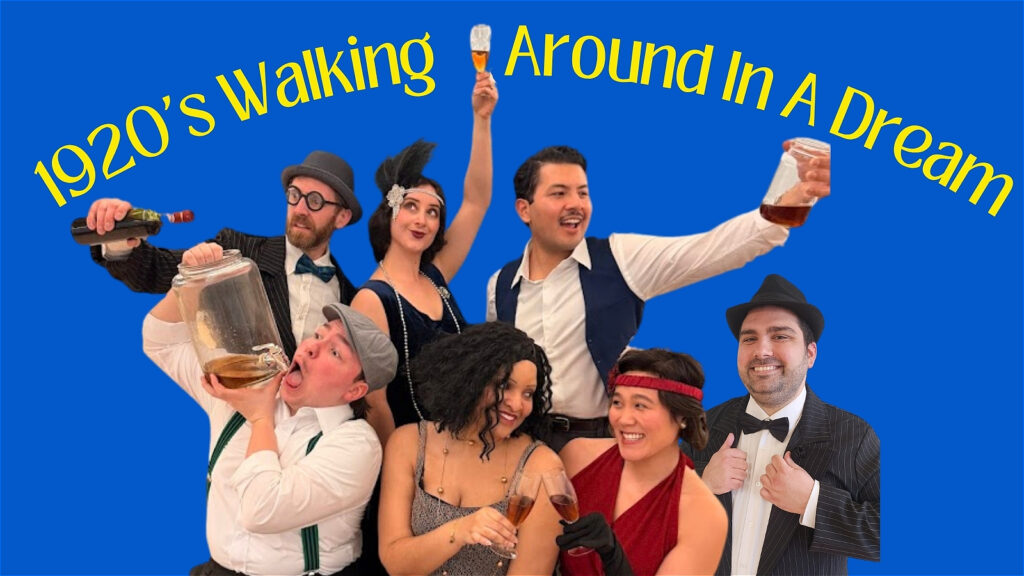
1920’s Walking Around In A Dream
Rating: B-
Reimagining Shakespeare is never an easy task, so I have to give credit where it’s due. Turning A Midsummer Night’s Dream into a 1920s Chicago musical is an ambitious undertaking, and I admire the company for taking such a big swing. Whether it fully lands is another story.
Set against the backdrop of the roaring twenties, 1920’s Walking Around In A Dream puts a jazz-age spin on Shakespeare’s classic love story. It’s a fun concept, and there are moments where you can see the potential of the idea shining through.
An interesting perspective that I heard a friend talk about was that because these performers are using 1920 slang that is kind of odd and foreign to us as an audience, it sort of reflects how the audiences who saw Shakespeare’s original plays might have interpreted his works, especially because he was making up new words and new meanings of words. That was quite a cool and interesting lens to watch the show through.
Unfortunately, the biggest hurdle for me was simply understanding the script. The cast performs with 1920s Chicago accents, and while I appreciate the commitment to the setting, several performers speak far too quickly and don’t fully enunciate their lines. Combined with the fact that the actors aren’t miced, much of the dialogue—and later, many of the song lyrics— were difficult to hear from where I was sitting…in the second row… There were certainly performers who handled this better than others, but overall it made understanding the dialogue more challenging than it needed to be.
The stripped down story/script also didn’t always grab me during the one hour run-time as well. It was very cute, but not very captivating.
The choreography and direction, however, were a real highlight. It injected the show with energy and helped capture the spirit of the era, giving the production some of its most entertaining moments. While I enjoyed the songs, I found that few of them really stuck with me afterward. They were pleasant enough, but I often wished they did a little more to advance the story or deepen the characters rather than simply existing within the show.
At times, the production felt a little amateurish, but in a way that was more earnest than off-putting. You could feel the passion behind it, and that’s something I always appreciate, especially at Fringe. Not every creative risk pays off completely, but I’d much rather see artists attempt something bold than play it safe.
1920’s Walking Around In A Dream may not hit every note, but it’s a spirited and ambitious reimagining of one of Shakspeare’s most popular plays. With a little more refinement, I think this production could really find its footing.
*****
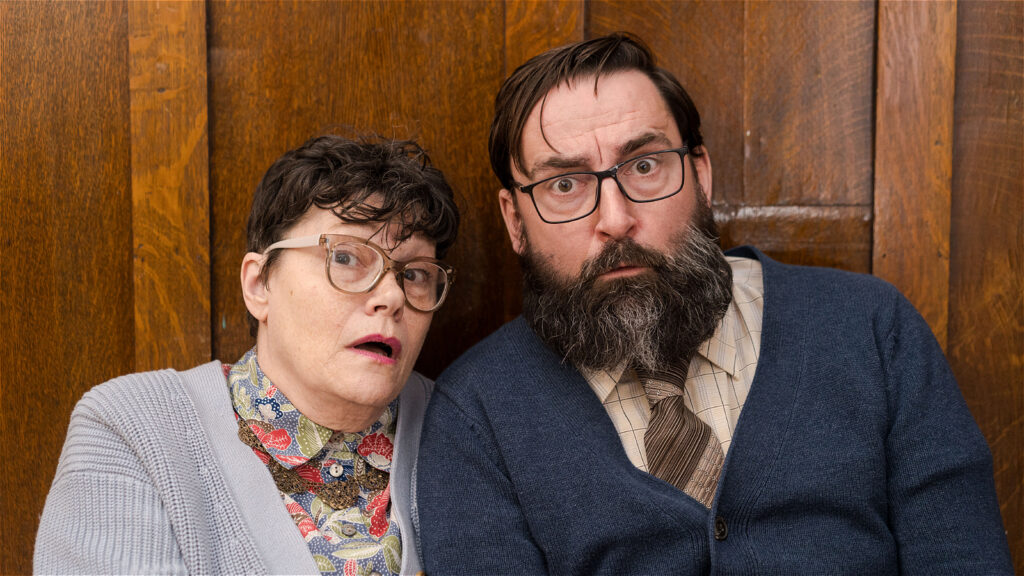
Evie & Alfie: A Very British Love Story
Rating: A
I’ll be honest: I didn’t think Evie & Alfie: A Very British Love Story was going to be for me. I went in thinking that maybe it just wasn’t my taste in theatre or comedy. But I was very quickly proven wrong, because this show was absolutely delightful.
The production follows Evie and Alfie through a lifetime of love, and it does so with so much charm, warmth, and humour. It really spoke to my personal love of British comedy, finding that perfect balance between being incredibly funny without becoming too silly, and being heartfelt without tipping into something overly cheesy or rom-comy. What makes the show work so well is how believable it feels. This is not some glossy, idealized version of love. It feels like two real people choosing each other over and over again.
Alex Dallas as Evie and Jimmy Hogg as Alfie are both fantastic. Their full commitment to these characters is what sells the entire thing. The chemistry between them feels easy and lived-in, and they capture the sweetness, awkwardness, stubbornness, and tenderness that comes with a long relationship. The show is so cute and so funny, but never in a way that feels forced.
I do wish the piece had spent a little more time exploring some of the harder realities of marriage. The show touches on things like infidelity, illness, death, aging, and the passing of time, but it doesn’t dive too deeply into them. That said, with only an hour to tell a lifetime of love, I understand why the production chooses to acknowledge those heavier moments rather than fully sit in them.
Overall, Evie & Alfie: A Very British Love Story completely won me over. It is funny, sweet, genuinely moving, and anchored by two wonderful performances. Sometimes Fringe surprises you in the best way, and for me, this was absolutely one of those times.
*****
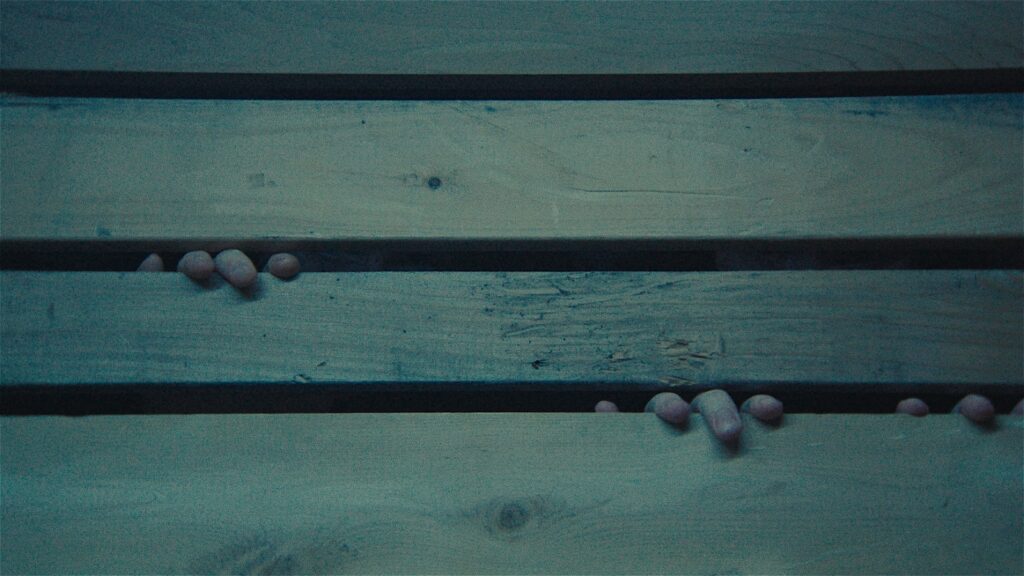
Springtime
Rating: A
From the moment you walk into Springtime, there is a sense of unease. The audience is greeted by droning music and a large wooden box sitting in the middle of the room. It is meant to be buried, and while it obviously cannot be fully buried for us as an audience, it still immediately gives you the feeling of how cramped, hot, and uncomfortable it must be to live inside such a small space.
The play follows June and May, two women hiding as enemies of the state, but we’re never given the full picture as to what has happened to them. We are given pieces of information, small glimpses into their lives, but we are kept in the dark quite a bit. Ironically, our experience mirrors the experience of the women themselves, who are surviving in a world where they have very little control, very few answers and are literally living in the dark.
What struck me most about the production was the constant movement. June and May are always shifting, always trying to find somewhere to sit, sleep, breathe, or simply exist. None of it looks comfortable, and that discomfort is the point. It makes the audience feel the physical reality of their confinement without needing to overstate it.
The play also deals with the exploitation of innocence, particularly through the way one of the women is taken advantage of by the homeowner who is supposedly protecting them. That part of the story is deeply uncomfortable, as it should be.
The writing is really wonderful, and the delivery of the text feels completely authentic, which is essential for a show like this. You cannot tell a story this intense without that level of honesty. Kendra Cordick as June and Katie Lawrence as May both give very strong, appropriately intense performances.
The projections by Kira Bhandar Ma are also used very effectively, illuminating certain moments without overwhelming the production. The vivd pictures aid us in our discomfort, while giving our imaginations a bit of a break, highlighting feelings and actions thorugh stop-motion, simple animation, and a lot of texture.
My main issue with the piece is that I did want a bit more clarity. As I hinted earlier, there are so many unanswered questions, and unfortunately, I am the type of audience memeber that wants them answered. I feel like a little more context would have strengthened the emotional stakes, and allowed someone like myself to enjoy the play much further.
That being said, Springtime is a tense, well-acted, and deeply uncomfortable piece of theatre. It is not an easy watch, but it is a compelling, and unique one.
*****
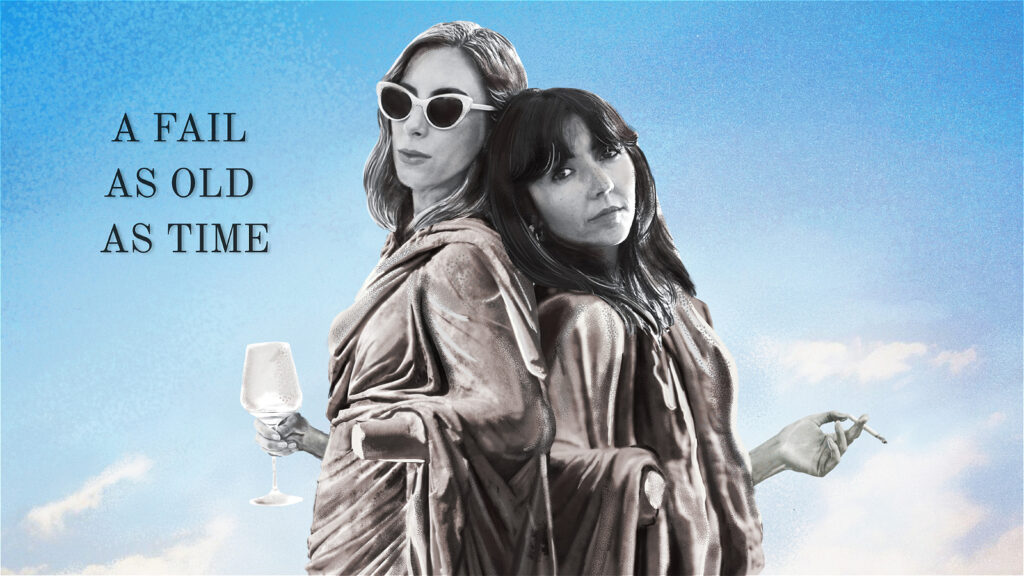
2% of Condoms
Rating: A-
2% of Condoms is one of those shows that really catches you off guard. Written and performed by Nikki Bon and Claire Cavalheiro, the show follows their friendship from adolescence into adulthood, becoming friends after learning that both of them were conceived thanks to broken condoms. This show touches on everything from complicated teenage years to absent fathers, sex parties, and unexpected motherhood.
One of my favourite scenes personally was one where they were reflecting on being teenage girls, reading teen-heartthrob magazines in the 90s and early 2000s, and being given very inappropriate information in those magazines. It took me back to when I was in elementary school, hearing the girls talk about these issues during recess, and even then feeling like all I could be is a listening ear and a supportive friend.
Though it was an amazing piece of sketch comedy, I also feel like this show may have not have tickled my funny bones as much as it did other people. It’s also very possible that because I do not have the lived experience of being a girl, a woman, or a mother, that some of the nuance of the show was lost on someone like myself. That’s not saying it’s bad by any means, it just may not have been my cup of tea. Even still, 2% of Condoms had a lot of laughs and a lot of heart, and I would definitely worth a watch!
*****
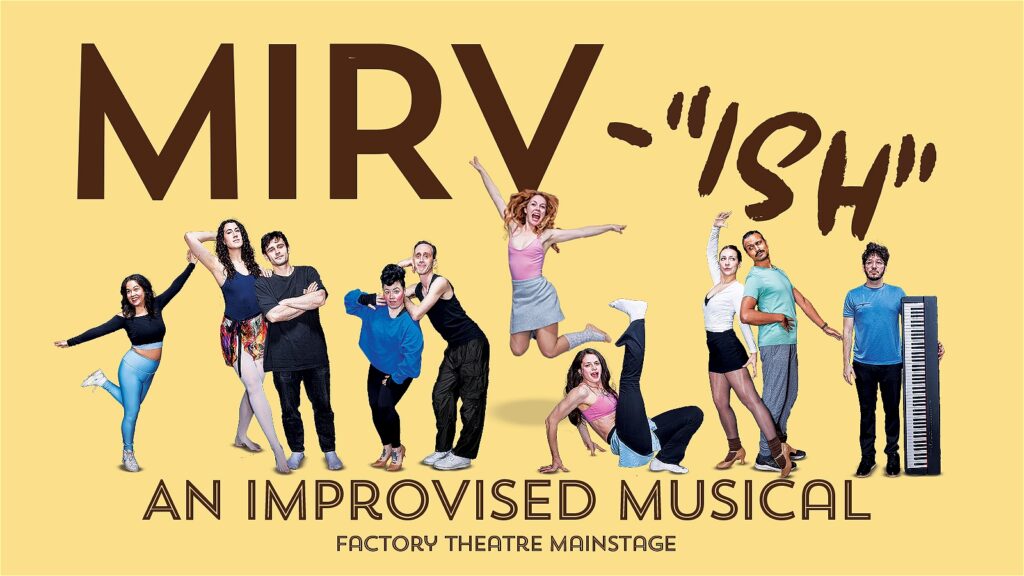
Mirv-“ish”: An Improvised Musical
Rating: A
I love musical theatre, and I love improv, so naturally, musical theatre improv is extremely up my alley. I’ve seen musical theatre improv before and loved it so much that I basically swore I would see more of it whenever I had the chance. So when Mirv-ish came up, I knew I had to jump on it.
The entire show is completely made up on the spot, which means no two performances are the same. For our show, the audience suggestion started with the idea that the Toronto sewers were blowing up, which then kind of turned into “general bad things are happening to the city sewer.” From there, we got a story about two villains causing havoc around Toronto by trying to blow up the sewers. Why exactly were they doing this? Honestly, I’m not totally sure. General evil is probably the best answer. But that was the ride we were on, and I was happy to go along with it.
The show ended up following three main storylines: two villains trying to destroy the sewers, a couple on their wedding day with a groom hiding in the bathroom because he has cold feet, and two sewer technicians trying to keep the city’s plumbing from falling apart. Watching these groups eventually collide with each other was genuinely hilarious, and it was so impressive to see the performers build connections between these totally ridiculous storylines in real time.
The cast is incredibly talented. They all have great comedic instincts, strong singing voices, and the ability to harmonize and blend beautifully with each other, which is not easy when you are literally making everything up as you go. Musical improv is such a specific skill, and this cast made it look effortless.
Of course, because it is improv, some things worked better than others. I did feel that about two-thirds of the way through, the energy in the room dipped a bit, and some audience members seemed to get a little antsy. That is no fault of the performers, who were doing an amazing job with what they were given. It may simply be that the suggestion was not the strongest one to sustain a full hour-long musical. I do wonder if the format might benefit from two shorter improvised musicals within the hour instead of one longer piece. That could keep things feeling fresh, light, and exciting from start to finish.
Still, Mirv-ish is such a fun concept and an absolute showcase for a very talented group of performers. The entire cast was fantastic, but I have to give a special shout-out to musical director James Atin, whose playing was wildly impressive. To follow the performers, build songs on the spot, and make the whole thing feel like an actual musical is no small feat.
Mirv-ish is silly, chaotic, and very, very fun. Even when every moment does not fully land, the talent on stage is undeniable, and when it works, it really works.
*****
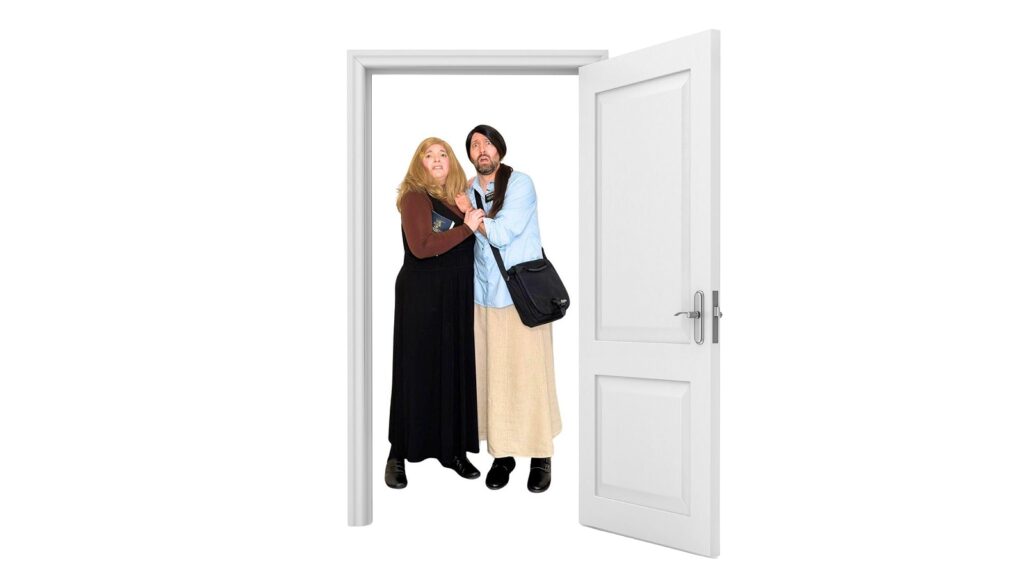
Spiritual Bob is Trapped in Paradise!
Rating: B
Spiritual Bob is Trapped in Paradise! has a really interesting premise. Written by Caspian Keys and starring Claire Rice as Sister Jackson and Nicky Nasrallah, aka Toronto’s favourite drag queen Selena Vyle, as Sister Lewis, the show follows two Mormon sister missionaries who are magically locked in a room where their fears, desires, and possible futures start to reveal themselves.
The play begins by showing us the more mundane and repetitive parts of missionary life, memorizing talking points about the church’s stance on big topics like racism. We see the sisters going through the motions, and slowly revealing pieces of who they are, what they want, and what they may be afraid to admit out loud. Eventually, we learn that they are not exactly where they think they are. They have entered a new dimension of sorts, one where they are forced to consider the choices available to them and what their lives could look like moving forward.
For me, this show was really about choices. More specifically, it was about the choices available to women within the church, especially when what they want does not fully align with the values or expectations placed on them. What if you are queer? What if motherhood does not align with the future you want? What if happiness looks different than what you were taught it should look like? The play explores questions around identity, faith, queerness, womanhood, family, and the pressure to live a life that has already been decided for you.
Both performers bring a real earnestness to the piece. Claire Rice is very funny as Sister Jackson, and there were moments where her tone and mannerisms reminded me a bit of Alexis from Schitt’s Creek. Nicky Nasrallah brings a needed awkwardness and discomfort to Sister Lewis, which works well because this is a character who seems deeply unsure of who they are, what they want, and what they are allowed to want. That tension gives the audience something to connect to.
There were definitely moments that worked. The random dancing to cellphone ringtones was very funny, and I thought some of the references to Mormon-specific imagery, like the seeing stones, were clever. The show is at its strongest when it lets itself be weird, playful, and specific.
That said, I did find the pacing quite slow, and unfortunately, the show was not always as engaging as I wanted it to be. I think I went in expecting something more overtly comedic, maybe something that really poked fun at the Mormon Church in a bigger, sharper way. Instead, this is a more serious and introspective look at identity, acceptance, and self-determination within the Mormon faith. That is not a bad thing, of course, but I do think the script could be tighter and more effective in how it gets there.
The show is billed as a dark comedy, but I did not find much darkness in the comedy itself. Maybe it reads as darker if you have lived within the Mormon Church, where these questions and choices may feel much more challenging or dangerous. But from my perspective as an audience member, it felt more thoughtful and heartfelt than dark and comedic.
Spiritual Bob is Trapped in Paradise! is a worthwhile watch if you are interested in stories about queer identity, women’s autonomy, faith, and the complicated process of choosing joy when the life expected of you does not feel like your own. While it did not fully grab me, I appreciated its heart, its performances, and what it was trying to say about chasing happiness and choosing life on your own terms.
*****
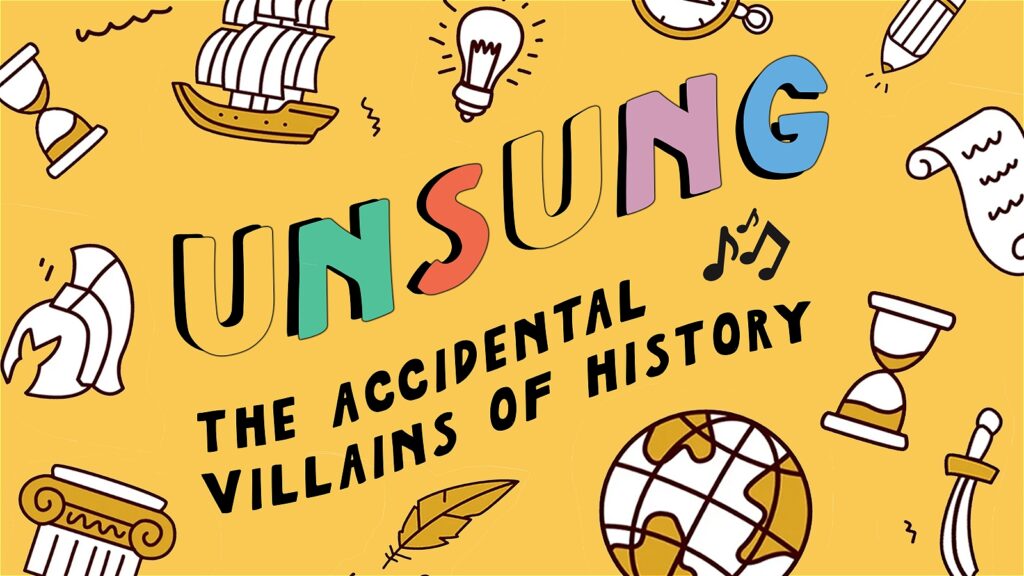
UNSUNG: The Accidental Villains of History
Rating: A+
So let’s just cut to the chase: I loved this show.
UNSUNG: The Accidental Villains of History The production takes different moments from history and reimagines them through catchy songs, sharp comedy, and a series of fast-paced vignettes. We see stories like the sinking of the Titanic, the invasion of Troy, and the stock market crash, all told through the lens of the people who may have accidentally caused some of history’s biggest disasters. To be clear, this show is inspired by history, not a factual history lesson, and I appreciated that they address that right away in the opening number. It pokes fun at the idea that some audience members may come in expecting everything to be completely accurate, when really, we are here to be entertained.
And entertained I was.
The cast is incredible. Tess Barão, Mackenzie Langdon, KC Martinez, Jillian Peters, Nolan Rush, and Tyler Winder are all so committed to their characters, and the vocal talent across the board is seriously impressive. The harmonies were strong, the voices were fantastic, and the energy never dipped. I also really appreciated the simplicity of the costuming. Starting with a base palette of black, white, and grey, then adding layers and accessories to bring each character to life, was a smart and effective choice.
This show is clearly very well rehearsed. The choreography is tight, the transitions are clean, and everything feels polished without losing its sense of fun. Director and choreographer Jordan Robertson-Reid did an amazing job keeping the whole thing moving with style and precision. I especially loved the Troy battle choreography. It was so good, and easily one of the standout moments of the show for me.
The songs were also genuinely strong. With a concept like this, I think there is always a risk that the music could feel a little hollow, but that was not the case here. The songs were catchy, clever, and actually really fun to listen to. They helped push each vignette forward while also giving the cast room to show off their comedic timing and vocals.
For the most part, I thought the sound balance was quite good, and I was especially thankful that the singers were miked, because in a space as large as the Theatre Passe Muraille Mainspace, they absolutely needed to be. That said, there were some noticeable mic issues, including hotness and feedback. You could tell they were doing their best to fix it, but it was definitely distracting at times.
Technical issues aside, I really enjoyed the show overall. UNSUNG: The Accidental Villains of History is funny, smart, polished, and full of fantastic performances. It is the kind of Fringe show that reminds you how exciting musical theatre can be when everyone on stage is fully committed and clearly having the best time.
*****
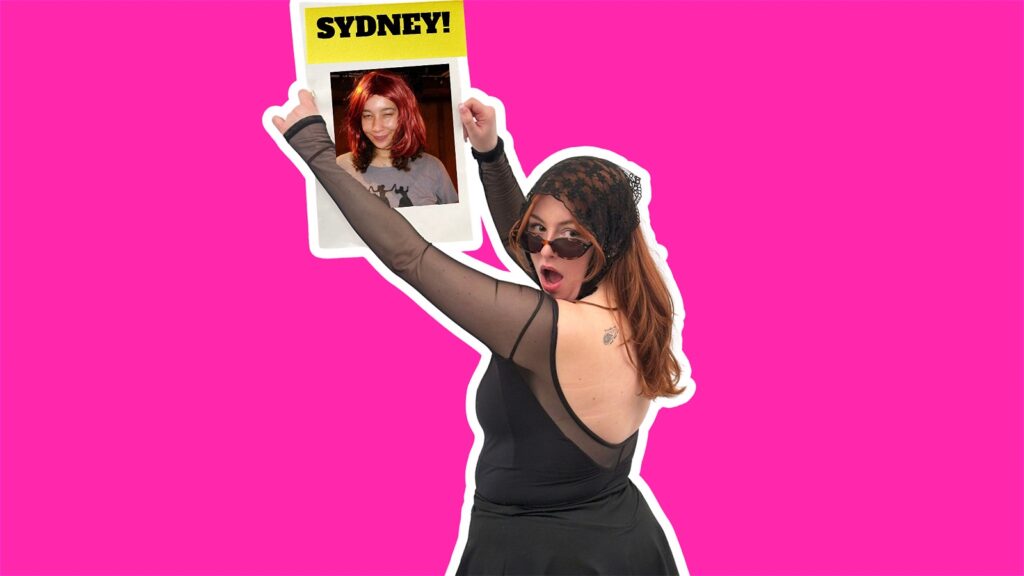
Cold Maple Cloth: The Farewell Tour of a Delusional Diva
Rating: B-
I’ve been engaging with musical theatre, on and off the stage, pretty much my whole life, so I can tell you first hand: trying to break into that industry as a professional is hard. Cold Maple Cloth: The Farewell Tour of a Delusional Diva definitely does a good job in exploring the difficulties of not succeeding in the one thing you want to do with your life. The rejection is constant, the body shame is real, and sometimes talent alone is not enough.
The show follows Sydney, a 27-year-old failing musical theatre actress who is ready to quit the business for good, but not before giving herself one final spotlight moment. Sydney has dreamed of being a musical theatre star and very clearly believes she is the be-all and end-all of the stage. The joke, of course, is that she is not quite the legend she thinks she is. She is delusional, dramatic, and convinced that the world has simply failed to recognize her greatness.
At its best, the show is a loving tribute to every theatre kid who has ever wanted to be chosen. There is something very real underneath all the comedy about wanting success, wanting validation, and wanting proof that all the effort was worth it. The idea of Sydney being confronted by a younger version of herself (played beautifully by Sierra Philbert) is also genuinely interesting. It brings up those uncomfortable questions many of us have probably asked ourselves: would younger me be proud of where I ended up? Would they understand the choices I made? Would they be disappointed?
The performances are strong, and both voices are very good. There is a lot of commitment on stage, and you can feel the affection for musical theatre throughout the piece. That said, the music was too loud, which made it feel like the performers were having to fight to be heard at times. It became distracting, especially in a show where lyrics and comedy really need to land clearly.
My biggest struggle was with the songs themselves. I did not fully realize going in that the music would mostly be reimagined versions of well-known musical theatre songs. For example, instead of “Roxie Hart”, we get “Sydney Page”. I understand the impulse, and I can see how that kind of parody could be funny, especially for an audience that knows the references. But many of the lyrics were close to the originals, with only slight changes to fit Sydney’s story. Because so many of us know where these songs come from, it sometimes felt a little odd rather than fully fresh.
I think the songs might have worked better if they were shorter and punchier. Instead of letting each number play out for too long, trimming them down could have made them feel more like sharp comedic moments that heighten the emotion of the scene. The show does not necessarily need fewer musical references, but it could benefit from more variety and tighter song lengths so the energy keeps moving.
The piece also starts to drag a bit near the end. It turns into a completely different play though near the end, where Sydney just decides to give up. She puts on a hoodie, sits on the stage, and sings something just for her. Her younger self then has the challenge of picking her back up. Then we see her go through more efforts and motions to try and find her success, but it would have almost been better off ending when she believes in herself again. I guess the problem is, if that were to happen, the audience would never find out what “Cold Maple Cloth” is, and I won’t spoil it for you here.
The emotional core is what makes the piece worthwhile for me. Sydney weaves a lot of honesty into her piece, especially when it touches on wanting to be chosen, self-sabotage, and the strange bravery of making something by Sydney and for Sydney. There is something admirable in that. The Fringe is a great place for artists to tell personal-feeling stories and connect with people who may have gone through similar disappointments, dreams, and reinventions.
Cold Maple Cloth: The Farewell Tour of a Delusional Diva still needs some tightening, especially around the song choices and pacing, but for musical theatre kids, there is absolutely something here to appreciate. It understands the ache of trying, failing, wanting more, and still needing one last big number before walking away.
*****

Stupid Cupid
Rating: D
Before I begin, I want to say this: theatre is hard. Stupid Cupid was created and performed by a brave and ambitious team of young artists, and I genuinely do not want this review to discourage anyone involved from continuing to create theatre, practice their craft, or explore writing, directing, acting, design, or any other part of the process. Making theatre takes courage, and putting your work in front of an audience is no small thing.
Stupid Cupid takes place in Cupid’s matchmaking offices on Mount Olympus, where Iris, Cupid’s overworked and underappreciated personal assistant, is hoping to finally earn a promotion. She clearly deserves it. Iris works incredibly hard, keeps the office functioning, and allows Cupid to steal her ideas while he coasts through life, enjoying his carefree world of sex, drugs, and narcissism.
There are some strong ideas here. The show is clearly trying to talk about workplace inequality, race, gender, power, and what happens when someone is forced to constantly fight for opportunities that should have been theirs in the first place. Iris is a character we immediately want to root for. We want her to succeed. We want her to be recognized. We want her to win.
Unfortunately, the production still needs a lot of refinement. The music was insanely loud and really needs to be adjusted, as it often overpowered the performers. Some of the acting also felt quite wooden and not fully believable. If I were directing this piece, I would want to spend more time with the actors on authentic, earnest delivery—really understanding what they are saying, why they are saying it, and how to make those lines feel lived-in rather than simply recited.
A highlight of the show for me was the delivery of the first, big, angry monologue by Iris (Debora Itimbien, who was also the creator). Her delivery was powerful, authentic, and had me perk up in my seat.
I also want to shout out the costume design, especially the wings, which were really well done. They added a nice visual element to the world of the play and helped bring the Mount Olympus setting to life. Props and lighting were also quite outstanding in this show as well, and should be noted.
The script itself is also trying to take on a lot at once. There are conversations about race, Blackness, workplace discrimination, gender expectations, Black guilt, policing, drugs, and inequality, and while I admire the ambition, many of these moments happen so quickly that they don’t always land with the weight they deserve. For example, when Iris goes to the underworld to get drugs for Cupid and encounters someone she knew from school, the play suddenly opens up a conversation about Black youth, police brutality, and the long-term impact of being targeted by the system. That is an important and worthwhile idea, but in this version of the script, it feels like it comes out of nowhere.
That was my biggest struggle with Stupid Cupid. It has so much it wants to say, and many of those things are genuinely important, but the show does not always give itself enough time or space to explore them fully. Because of that, certain moments feel forced in rather than naturally woven into the story.
The ending also left me conflicted. For so much of the show, we are rooting for Iris. We want her to rise above the unfairness around her and finally get what she deserves. But by the end, she becomes so broken and so unredeemable that I was left wondering what the play wanted me to take away. Is it about the unfair treatment of Black people in corporate spaces? Is it about what happens when people are pushed too far? Is it about power corrupting even those who have been powerless? Those are all interesting questions, but I do think the script needs more clarity around what it is ultimately trying to achieve.
Still, I admire the ambition behind Stupid Cupid. This is a young team taking big swings, and even when those swings do not fully connect, there is value in the attempt. With more time, tighter writing, stronger direction, and a clearer focus, I think there is potential here. Theatre is built through practice, revision, failure, risk, and growth—and I hope Itimbien and this team keeps going.
*****
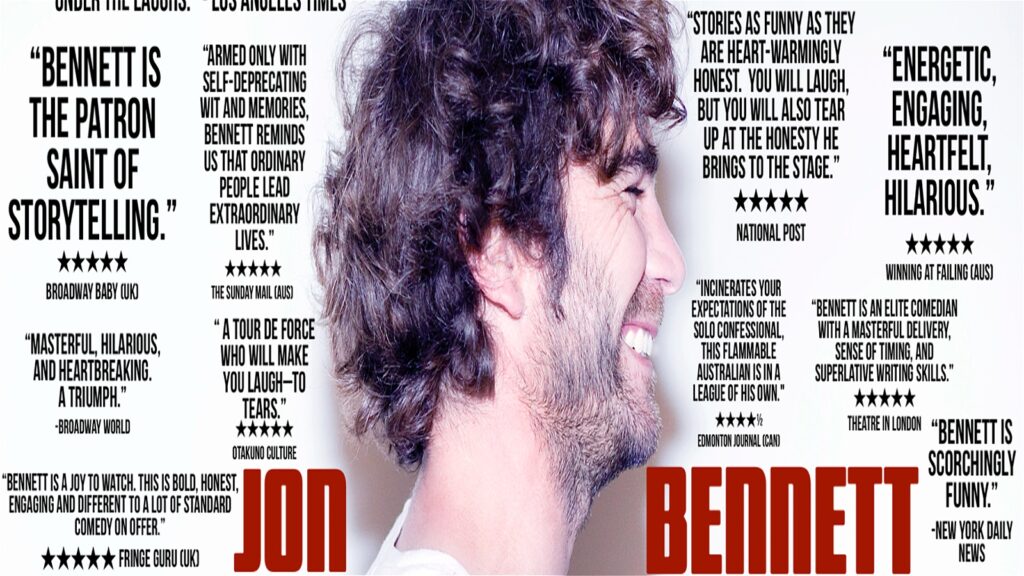
Jon Bennett: AMERICAN’T
Rating: A+
We walked into the theatre to Miley Cyrus’ Wrecking Ball playing over the speakers. Shortly after, Jon Bennett walks out and says, “That’s the only song on this playlist.”
Immediately, I knew I was going to love this show.
Jon Bennett: AMERICAN’T is a storytelling show about Bennett’s chaotic attempt to survive being stranded in the United States during the pandemic, eventually being forced back to rural Australia, living once again with his conservative, and deeply eccentric family, and then finally making it back to America, only to be arrested upon arrival. His home has been the stage, touring around the world to perform his hilariously crass, but meaningful comedy, so this update in his life sucks hard.
Bennett is truly an amazing storyteller. The show is incredibly polished, and he clearly understands the mechanics of storytelling and joke writing so well. He knows exactly when to build tension, when to undercut a serious moment with a joke, and when to let the audience sit in something vulnerable. He also uses projections and videos in a way that amplifies the story rather than distracting from it, making the whole thing feel dynamic, personal, and completely engaging.
And while the show is very, very funny, it is also deeply vulnerable. Bennett peels back the layers and speaks honestly about some of the lowest moments in his life, including drinking, gambling, and thoughts of ending his life. What makes the piece so moving is that it never feels like he is asking for pity. Instead, he is showing us how messy and complicated survival can be, and how sometimes it’s the little things that save. For Bennett those things are a women he loves dearly (who he then claims he’s now divorced from…so…), performing, and a friend’s little daughter begging him to come visit her in New York.
I was laughing throughout the entire show, but I was also genuinely moved. Bennett has this rare ability to make you feel like you are just listening to a very funny friend tell you the wildest story you have ever heard, only to realize halfway through that he is also saying something incredibly honest about family, loneliness, survival, and finding your way back to yourself.
Jon Bennett: AMERICAN’T is hilarious, heartfelt, vulnerable, and masterfully told. It is the kind of storytelling show that reminds you just how powerful one person, a slideshow, and one truly unbelievable life story can be.
*****

God Save the Sodomites
Rating: A+
God Save the Sodomites is exactly the kind of ridiculous, bold, slightly unhinged show that makes Fringe so much fun.
The play follows two messenger angels, Af and Barbiel, who are sent to Sodom and Gomorrah for a casual little Sunday smiting. Af, the more experienced angel and angel of God’s wrath, wants to keep things simple: destroy the city, save Lot, and call it a day. Barbiel, angel-in-training and angel of the month of October, the constellation Scorpio, and, hilariously, the genitals of the human body, has a slightly different plan. Barbiel wants to prove that there are at least five good people in Sodom, hopefully convincing God to spare the city.
When we walked in, we were given the option to write down the “goodest” thing we had ever done, the worst thing we had ever done, and how far we would be willing to go to return a glove. Yes, incredibly random, but I was immediately curious to see where it was all going, so naturally, I filled it out. These became our “confessions,” and the audience was brought into the show as the people of Sodom.
At one point, the angels pull up two confessions, compare them, and the audience votes on who deserves heaven and who deserves hell. I, unfortunately, was doomed to hell. Womp, womp.
The show is a hilarious take on one of the Bible’s most absurd stories, using the tale of Lot, Sodom, and divine judgment to poke fun at righteousness, hypocrisy, blind obedience, and who actually gets labelled “good” in these stories. The more Af and Barbiel investigate, the more they realize Lot may not exactly be the righteous man history has made him out to be. In fact, the show suggests that Lot’s wife may be the only truly good person in the whole situation, which honestly tracks.
The performances are wonderful. Aliyah Bourgeault as Barbiel, Emmet Logue as Af, and Kaleb Piper as Lot are all so committed, funny, and completely locked into the strange little world of the play. I saw all three of them last year in The Ensemble, which was easily one of my favourite shows at Fringe, so I was excited to see them together again. Once again, they bring performances that feel genuine, earnest, and very, very funny.
What I appreciated most was how the show manages to be silly without feeling careless. It knows exactly how absurd the premise is, and it fully leans into that absurdity, but underneath all the jokes, there are some interesting questions being asked about morality, faith, judgment, and whether following orders automatically makes someone good.
God Save the Sodomites is clever, chaotic, and deeply entertaining. It is biblical comedy with just the right amount of audience participation, a lot of laughs, and, apparently, a direct path for me straight to hell. Worth it.
[Review by Shan Fernando]
Toronto Fringe Festival runs from June 30th- July 12th, 2026
Tickets can be purchased here
Pingback:2026 Toronto Fringe Festival- Part 2 - The Extra Mile