

2026 Toronto Fringe Festival- Part 2
This page will be updated as I see more shows. Stay tuned!
There are SO MANY shows in the Toronto Fringe this year, that we had to create a second page to house them all! To all all of my previous reviews, click here.
I will be doing my very, very best to review as many shows as possible, giving them an honest but fair shake. No matter what I say, I applaud each show for going the distance and doing something incredibly difficult: putting on a show. As last year, I will be adding a ‘grade’ to each and every review.
A+ – A fantastic show, on my “Must See” List for the year.
A – A great show, but with a few bumps to smoothen out. Still worth seeing.
B – Has many elements of a great show, but needs work before the next production. Go into the show with an open mind.
C – May not be the best show out there, but I can appreciate their hard work and recognize the courage it takes to put on a show. Proceed with a very open mind if attending.
D – Needs a lot of work before giving it another go. Don’t give up, creating theatre is not easy!
* * * * *

110% Percent Wizard
Rating: A
This review is going to be short and sweet: I absolutely loved 110% Wizard.
Keith Brown is a fantastic magician, yes, but what makes this show work so well is that he is also a really wonderful storyteller. The magic is fun and filled with those classic “how did he do that?” moments, but the stories are what really stayed with me. They are told with so much heart, humour, and honesty.
Brown is incredibly charismatic and genuine on stage. He has this relaxed, easy presence that makes the audience feel completely welcome, which is even more fitting because every performance of the show is a relaxed performance. I really appreciated that level of inclusivity being built into the experience.
There are some great twists on classic magic tricks, but no spoilers from me here. Part of the joy is just letting yourself be surprised. I especially loved hearing Brown talk about how another Fringe show eventually led to him being signed by a cruise ship agent, and how he survived his first few weeks performing without his magic tricks, thanks to the incompetence of American Airlines.
At its heart, 110% Wizard is not just about magic. It is about family, support, and the special people who come into your life and change it for the better. Keith Brown is charming, funny, talented, and deeply sincere, and this show is an absolute joy.
*****
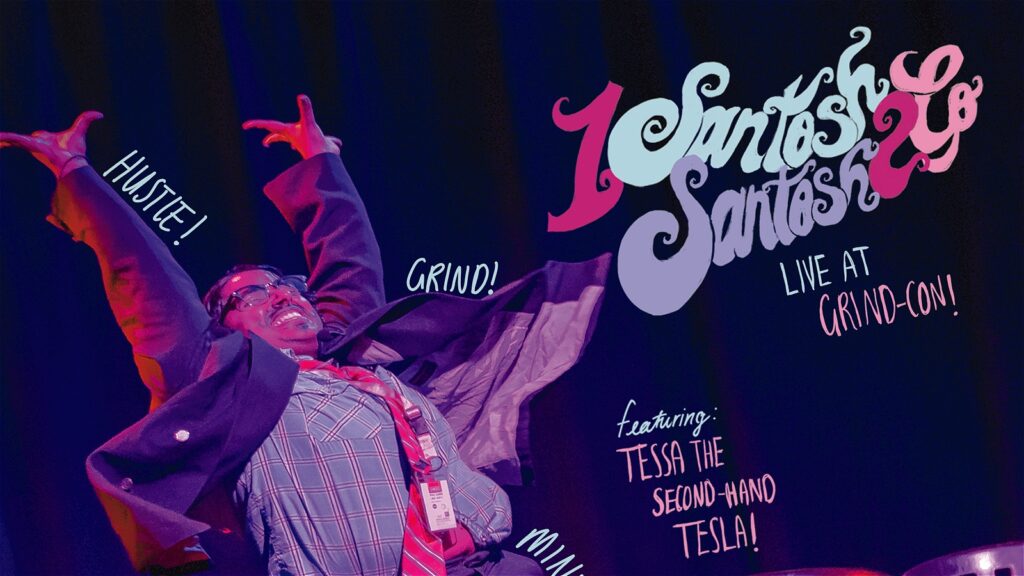
1 Santosh Santosh 2 Go: Live at Grind-Con!
Rating: D
1 Santosh Santosh 2 Go: Live at Grind-Con! is probably one of the most memorable Fringe shows I have ever seen. Mostly because it was… wild.
This drag king show stars Srutika Sabu as Santosh Santosh, aka TOSH, a not-so-successful tech bro and motivational ‘grindset’ influencer. Of course, you could never convince him of that. In his mind, he is basically the be-all and end-all of motivation bros. Tosh gets the chance to be a very last-minute speaker at Grind-Con!, riding high on his LinkedIn presence, 37 endorsements, and one heart reaction from Sundar Pichai’s fan account.
The concept is very funny, and there is definitely something sharp in the way the show pokes fun at hustle culture, tech bros, and the empty language of success, productivity, and “mindset.” That said, the story itself felt all over the place. There were moments where I could see the potential of the idea, but the show did not always feel focused enough to fully land.
I also have to say as a general rule of thumb, I do not love forced audience participation, and this show has a lot of it. There were moments where it felt like the script could not move forward unless the audience reacted in a very specific way, which can be tricky. Audience interaction can be fun when it feels loose and natural, but when it becomes necessary for the structure of the show, it can start to feel a little uncomfortable.
The show also spends a lot of time on Tosh’s girlfriend, Tessa, who is, yes, a Tesla. We watch him court the Tesla and eventually mime having sex with the car. So, yeah. It got weird. Very Fringe, but very weird.
For me, the strongest part of the show came when the veil dropped a little and we got a more heartfelt exploration of what it means to be a brown person in this sphere. The piece touched on how brown people can be valued differently depending on whether they immigrated here or were born here, and the complicated feeling of wondering whether you are “enough” as a brown person. As a brown person myself, that moment really resonated with me. It felt honest, vulnerable, and much more grounded than some of the broader chaos around it.
1 Santosh Santosh 2 Go: Live at Grind-Con! is what I would call a real “Fringey” show. It is strange, experimental, messy, bold, and very much doing its own thing. I do not think this version of the show was fully successful, but I do think there is something here. With more refinement, a clearer structure, and a bit more trust in the quieter, more personal moments, I think the creator could really do something special.
Even though this one did not fully work for me, I am absolutely rooting for Srutika and hope that we see them again in something more realized and polished.
*****
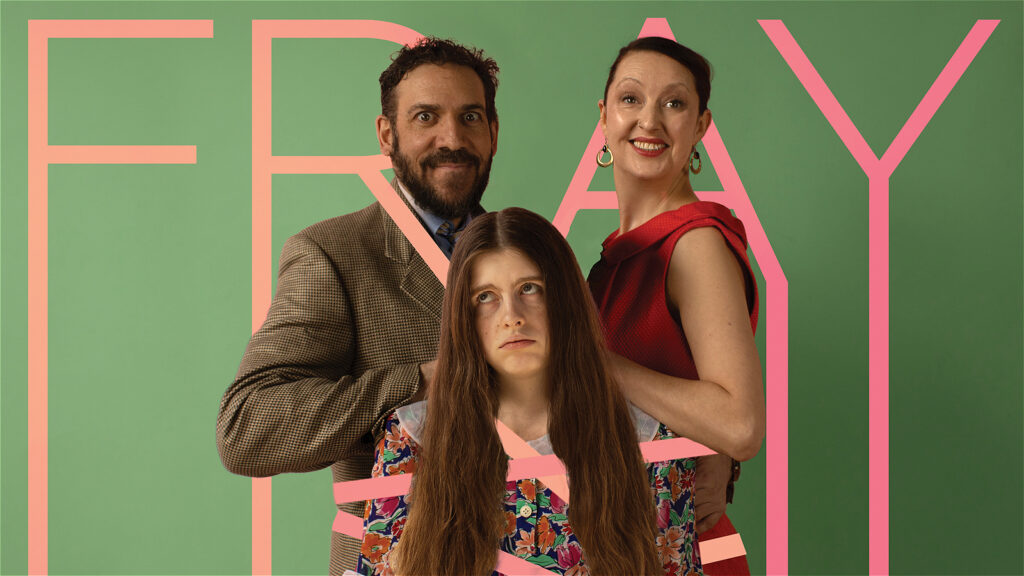
Fray
Rating: A
Family is complicated because it is often the first place we learn who we are supposed to be, long before we have the chance to decide who we actually are. Growing up means trying to pull yourself away from those expectations, but that is never easy when love, guilt, resentment, obligation, and history are all tangled together. Fray lives inside that tension, exploring what happens when one person desperately wants to build a life of their own, but the family around them keeps pulling them back into the same old patterns.
This is the kind of show that really benefits from being in an unconventional venue. Because of the space, the production is able to build out a more elaborate set and keep it intact for the entire run, which really works in its favour. The stage is covered with torn-up newspapers and books, and yards and yards of bright orange string run throughout the set and attached to the characters. The characters are tied to the space, the props, and each other, making the central metaphor impossible to miss, but still incredibly effective.
The play introduces us to the Mitchells: Bill, Rose, and Meg, a supposedly average 80s family living through their own everyday joy, fear, resentment, and existential dread. Interestingly, even though the show is described as an 80s family story, some of the visuals and family dynamics made it feel like it was reaching further back into the 50s or 60s. The mother wants to be the perfect entertaining host, answering the phone with the family name, while the father is strict, domineering, and always ready to assert control. Whether intentional or not, that slightly blurred sense of time adds to the feeling that this is a memory, or maybe a collection of memories, rather than something completely linear.
There is a lot of repetitive movement in the piece, with characters repeating gestures, actions, and conversations over and over again. At times, it feels like we are watching the same family fight, the same tension, and the same pain play out on a loop. Honestly, that really worked for me. When you look back at your childhood or your family history, especially the more difficult parts, it can sometimes feel exactly like that: the same moment echoing again and again. The cast does an amazing job in living in the repetition, and never breaking out of the moment.
To me, Fray feels like a queer coming-of-age story wrapped inside a dark comedy about family and the desperate urge to escape. Each family member has their own form of distraction or survival: television, newspapers, romance novels, routine. But Meg feels different. She feels like someone who knows she needs to get out, even if the family around her keeps making that feel impossible.
The string becomes such a strong visual representation of codependency, especially within a toxic family. Even when one person wants to leave or break the cycle, they are still physically and emotionally tied to everyone else. That image could easily feel too obvious, but the choreography around it is genuinely beautiful. Watching the actors move around each other, become tangled, untangled, restricted, and pulled back in was very well done. Alireza Keymanesh’s movement direction gives the show a kinetic energy that makes the family’s emotional tension feel physical.
One of the strongest moments comes when Bill completely loses control and smashes a glass. The moment is heightened and jarring, and then, almost immediately, everything goes back to normal. That, to me, captured the toxicity of the household so well. Something violent or terrifying happens, and then everyone just keeps going, because that is what “normal” has become.
The relationship between Meg and her mother is especially painful. Rose is often quite cruel to Meg, and there is this suggestion that she had a much bigger, more exciting life before becoming a mother. There is an implied resentment there, as though Meg somehow ruined her youth or trapped her in a life she did not fully choose. That dynamic is uncomfortable, but it feels very real. Mom also constantly comments on Meg’s appearance, stating many, many times that she isn’t feminine enough, or too overweight, or ugly.
The play also does a good job touching on mental health, especially in a time when those conversations were not happening in the way they are today. Meg’s desire to escape feels tied not just to rebellion, but to survival. And when her family responds by telling her she cannot leave, even offering to get her her own chair, it lands as both absurd and heartbreaking.
Fray is not always a straightforward piece, and its timeline can feel a little unclear, but I think that ambiguity mostly works. The show feels like memory, trauma, and family mythology all tangled together. Robin North’s writing, paired with Keymanesh’s striking choreography, creates a piece that is dark, funny, uncomfortable, and visually memorable.
*****

Three Descending Notes
Rating: A
Three Descending Notes is a really beautiful, thoughtful, and surprisingly wholesome new musical about something that is, of course, incredibly scary.
In the show, Odelia, who is lost on the subway system and in the early stages of dementia, embarks on a fantastical journey to find her way home. Created by Robin North, with music and lyrics by Rachael Cardiello, VFX by Nae Phillips, and starring Georgia Grant as Odelia, the production blends live performance with projections, animations, and recorded performances to bring Odelia’s imagination to life.
One of the things I really appreciated right away is how human the show makes Odelia feel. Before we simply see her as someone experiencing dementia, we see her as a person trying to exist in a world that is often cruel about aging. There is a moment where she compares herself to younger women and tries to hide her age, and that felt very reflective of where we are as a society. We are so obsessed with youth that aging can sometimes feel like something people are expected to apologize for. This show pushes against that.
Still, Odelia admires their beauty, and does not put herself down, and I love that.
The writing is absolutely beautiful. The script has a poetic quality to it, and Georgia Grant delivers both the dialogue and songs with such honesty. Her performance is earnest, grounded, and deeply believable. Her voice is also incredible. There is a song when Odelia imagines that she is on a pirate ship, lost at sea, that is especially powerful, and Grant’s vocal quality in that moment is just stunning, but she keeps her power consistent through the entire show.
The projections and animations are also genuinely impressive. This is one of the coolest uses of animation I have seen in a live show recently, and the only time I’ve seen projections integrated into a show at the Fringe. The production is working with a very small stage, but the visuals expand the world so much. Suddenly, we are not just in one space. We are travelling through different places, and imagined worlds, all with a few set pieces and some clever visual design. It helps us understand the way Odelia’s mind is moving, shifting, and transforming the world around her.
I also loved the idea of trying not to be seen as “other” when you do not fully see yourself reflected back by the people around you. Odelia’s mind takes her on all these adventures, and while some of them are whimsical and even funny, we as the audience always understand what is happening underneath. That is what makes the show so “happy-sad.” We are rooting for her. We see her standing up for herself, caring for herself, being kind to pigeons, and insisting that she should not be judged for the way her mind works. But we are also sad because we as an audience knows what is happening to this wonderful person.
I did have a few issues with my experience. Because most of the cast, aside from Georgia Grant, appears through pre-recorded projections or animations, some of the songs started to feel a little long. The animations are wonderful, but watching an animated character sing for an extended period does not always feel as immediate as watching the live performer in front of us. There were moments where I wished the songs had been reimagined to include Odelia more, so the connection between the live performance and the projected world felt even stronger.
The production also suffers a bit because of the venue. Since it is in an unconventional space, the stage is only about a foot high, with rows of seats extending back. Unfortunately, if you are sitting past the first few rows, anything happening in the lower third of the screen can be hard to see. I was sitting closer to the middle and missed some visual moments, which was frustrating because the projections are such a key part of the show. I would love to see this piece in a larger space, on a proper stage, where the visuals could really be experienced fully.
Still, Three Descending Notes is a very moving piece. One of the most beautiful images comes near the end, when we see Odelia enveloped in vines, and she is happy. As someone who has had a grandparent go through dementia and Alzheimer’s, it hit me. It is a heartbreaking thing to witness, but I think this production approaches the subject with care, imagination, and a lot of compassion.
I also think this could be a really meaningful show for younger audiences. At about 45 minutes, it is shorter and more digestible, and the music and animation make a difficult subject easier to approach. I probably would not recommend it for very young kids, but for children old enough to start understanding bigger and scarier topics, it could be a beautiful way to begin a conversation about dementia, especially if they have grandparents or loved ones going through something similar.
Three Descending Notes is imaginative, tender, and visually striking. It takes a frightening subject and wraps it in music, poetry, and wonder, reminding us that even when the mind begins to change, the person inside still deserves dignity, kindness, and love.
*****

My Life as an “Inspirational Porn” Star!
Rating: A
My Life as an “Inspirational Porn” Star! is a bold, vulnerable, and deeply personal one-woman show written, performed, and produced by Gabrielle Leonore. Through comedy, autobiography, and multimedia projections, the show explores many themes: sexuality, neurodivergence, stigma, and what it means to define yourself before the world defines you.
I will say, the beginning of the show felt a little awkward. I’m not sure if this was intentional or just something that happened at the performance I attended, but Leonore came out quite early, sat on stage, and there was no background music. She tried to engage the audience with a bit of conversation or Q&A, but it felt like we weren’t quite ready for that yet. Because of that, the opening moments were a little strange and uncomfortable before the show really found its footing.
Once it did, though, there was a lot to appreciate. The show does a really strong job explaining the concept of inspiration porn, which refers to the objectification of disabled people as inspirational for non-disabled people. Leonore looks at the history of the term while also connecting it to her own lived experience as an autistic woman. She explores how she spent much of her life trying to fit in and mask parts of herself, only for things to shift once people around her knew she was autistic. Suddenly, she was being treated differently, labelled differently, and seen through a lens she did not choose for herself, or correctly defined her.
The show is very well written, and the images and projections are thoughtfully curated. They do not feel randomly thrown in; they add to the atmosphere and help shape the world of the piece. Leonore performs much of the show in sexy lingerie, playing with the “porn star” idea in a way that is funny, pointed, and intentionally provocative. It works because the show is very aware of what it is doing.
What stood out to me most was the vulnerability. Leonore divides her story into chapters, which I thought was a smart structure. It allows the audience to take in different parts of her life in pieces, making the show feel organized and digestible without losing its emotional honesty. She talks about being autistic, being labelled, being treated differently, being taken advantage of, and navigating moments that are difficult, embarrassing, funny, and deeply personal.
She also does not shy away from talking about sexuality, including experiences like the first time she had sex. Those moments could easily feel awkward or overly exposed, but they mostly feel honest. There is bravery in being able to stand in front of an audience and talk about the parts of your life that many people would rather hide.
Leonore is also very funny. She has a strong sense of humour and knows how to move through painful or traumatic moments without making the entire show feel heavy. Obviously, the autistic experience is not one-size-fits-all, but this show gives us a meaningful and eye-opening look into one person’s life and lived experience.
My main critique is that sometimes, and I really do mean sometimes, the line delivery felt a little wooden. You can tell the show is very well rehearsed because it moves smoothly, but there were moments where it felt almost over-memorized, like the lines were being delivered without as much flow or emotional connection as they could have had. I would love to see Leonore take deliver the lines that are meant to be a ‘period’ and deliver them in a way that doesn’t feel like she’s waiting for a response.
That said, performing a solo show for an hour is not easy. Performing a solo show about your own life, while also being funny, smart, vulnerable, and composed, is even harder. So I absolutely understand and forgive those moments of stiffness, especially because they were not constant.
My Life as an “Inspirational Porn” Star! is honest, funny, uncomfortable at times, and deeply personal. It is an act of vulnerability, but also an act of self-definition. Gabrielle Leonore is not asking to be turned into an inspiration. She is asking to be seen as a full person, with all the mess, humour, sexuality, pain, and complexity that comes with that.
*****
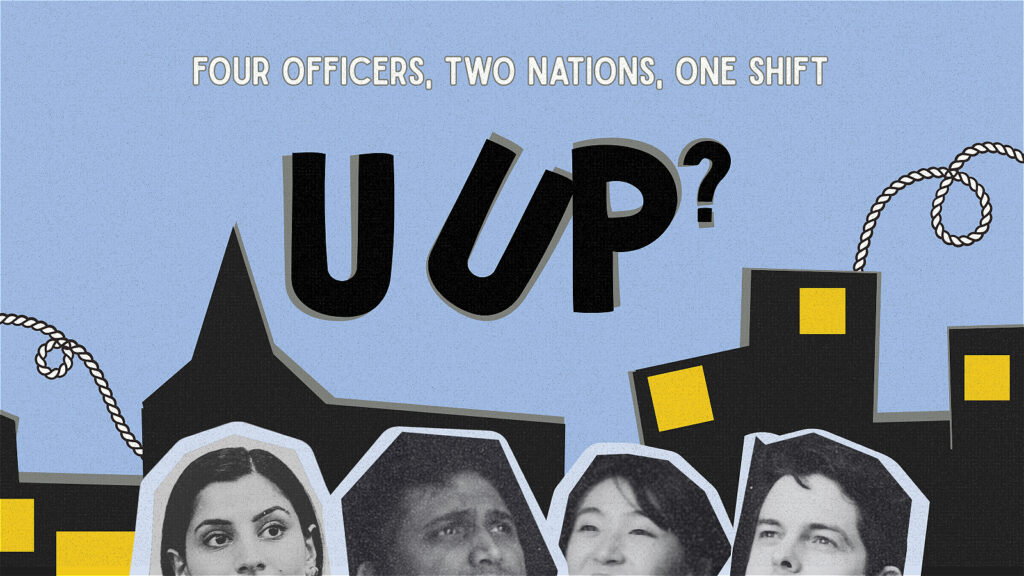
U Up?
Rating: D
I really wanted to like U Up? I walked in excited by the premise: four border officers, a forbidden love, and an escalating international incident along the world’s longest undefended border. There is so much potential there for a smart, silly, surreal comedy about national identity, authority, Canadian politeness, American confidence, and the strange imaginary lines we build between each other.
Unfortunately, the show did not really work for me.
When we arrived, we were given declaration cards to fill out before “crossing” our respective border, which was a fun idea. There were definitely some amusing bits playing on Canadian stereotypes, like needing to be nice, say sorry, and know how to work a bag of milk in order to enter the country. I could see the bones of a very funny concept there.
The problem is that the show felt almost entirely improvised. There were clearly some structured moments and planned beats, but most of the dialogue seemed to be made up live. As much as I love improv, this made the whole thing feel messy and unfocused. Performers were often talking over each other, and in a space as large as the Tarragon Mainspace, some of them really needed to slow down, enunciate more, and project. You can’t dramatically whisper if you don’t also project.
The show also relied heavily on forced audience participation, which I personally do not love. At the beginning, they played snippets of the national anthems and made people stand, which felt more awkward than funny to me. The declaration cards also became a long recurring bit, with performers reading them out and approving or rejecting applications to enter each country. The first couple were fun, but after a while, it started to drag.
At one point, they brought an audience member named Alexandra on stage, and she ended up being there for a very long time. Not just a quick bit, but what felt like 15 to 20 minutes. To be fair, Alexandra was very funny and engaging, and we later learned she was also an actor which explained her comfortability, but not an official part of the show. The most captivating person on stage should not be the audience member you brought up.
There was also a kind of “voice of God” element, though I wasn’t totally sure if it was meant to be the border itself speaking or some other higher authority. Either way, it was very loud, came out of nowhere, and added another layer that made the story feel even more complicated. At one point, one of the officers starts questioning why borders even exist and begins crossing the line freely, which angers this booming voice. I understand what they were going for thematically, but in a show that already felt messy, this added one more idea that didn’t feel fully integrated.
I do admire what the performers were trying to do. They were trying their best to have fun, be in the moment, and manifest some hilarious moments for the audience. They were clearly having fun with the idea but the storylines became too messy and convoluted. The love story, the border dispute, the audience bits, the improv games, and the declaration cards all seemed to be adding more haze to an already smokey room.
The love story also felt watered down all the way. They barely explore what is looks like, especially since it was a lebsian romance story. There was potential for so much more with this one story alone, and it just fell flat.
I also think the description of the show could be clearer. As we were leaving, I heard someone say that if they had known it was going to be an improv show, they would not have come. Honestly, I think that is fair. The premise sounds like a scripted surreal comedy, not a mostly improvised piece, and that distinction matters.
U Up? has a fun concept and a talented team, but for me, the execution felt too chaotic. With a tighter structure, an actual script, less reliance on extended audience participation, and stronger vocal clarity, I think there could be something really funny here. As it stands, it felt more like a collection of improv bits than a fully satisfying theatrical experience.
*****

Orbit
Rating: A+
Orbit, written and directed by Sarini Kumarasinghe, was a reminder of what elevates theatre: a good script, amazing actors, and being able to connect to the audience. This show demonstrates how powerful a simple premise can be when it is executed really, really well.
Set in a distant future where public transit exists in space, the play follows Roe, whose routine space commute suddenly goes off-course. Stranded on a rickety shuttle and lost somewhere in both bureaucracy and space, her only hope is a helpline staffed by an unnamed, underpaid customer service agent. What starts as a sci-fi survival story becomes something much deeper: a play about loneliness, poverty, immigration, refugee status, underpaid labour, and the systems that take advantage of people who are simply trying to survive.
I loved this play. I thought it was incredibly creative and clever, especially in the way it used a futuristic world to talk about very real, very current issues. Orbit explores what happens to immigrants, refugees, and under-waged workers when they are expected to work hard, show up, follow the rules, and be grateful, while the systems around them continue to exploit them. Both characters have a lot to lose, whether that be family, safety, stability, or their very existence.
The staging is really beautiful and smart. Ivy Miller as Roe and Will King as the unnamed phone operator are both on stage at the same time, but for most of the show, they cannot look at each other. Roe is on the shuttle, travelling to who knows where, while the operator is stuck in an office somewhere, trying to help her through a system that clearly does not care. That separation makes their connection feel even more powerful.
The acting here is phenomenal. Because the characters are in separate spaces, Miller and King are essentially delivering lines into the void, and yet their connection feels completely believable. That is not easy. Their performances are heartfelt, earnest, and deeply human. The text is delivered with so much care that I fully believed these people were going through what they were going through.
I especially loved the visual contrast between the two spaces. Roe’s shuttle is filled with warmer tones, making it feel hotter and more immediate, while the office uses cooler blues, creating a colder and more detached, almost clinical atmosphere. It helps us understand where each character is, not just physically, but emotionally.
The projections on the back wall are also really effective. They help us visualize what is happening in small but important ways. When the operator receives notifications, we see them. When the shuttle system updates, we see that too. It adds tension and clarity without overwhelming the production.
There are some really strong moments of tension throughout, especially as updates come through and the situation becomes more urgent. The dystopian world of the play feels unsettlingly familiar, with bots and AI-like systems controlling decisions, pushing people around, and reducing human lives to numbers, money, and efficiency. It’s a stark reminder that while technology can make things faster, and systems can be built to be more efficient, none of that means anything if we lose our empathy. We can increase speed. We can increase productivity. We can automate almost everything. But we cannot automate human care.
Orbit is also very much a play about choices. The choices we make to help each other. The choices we make to protect ourselves. The choices we make when survival is not guaranteed. That, to me, is what makes the story so relatable. We are all trying to survive in some way. We are all trying to build a life we can actually exist in, and sometimes the systems around us make that feel nearly impossible. It is a beautiful, thought provoking, and well delivered piece, and I hope it gets a re-mount somewhere!
*****
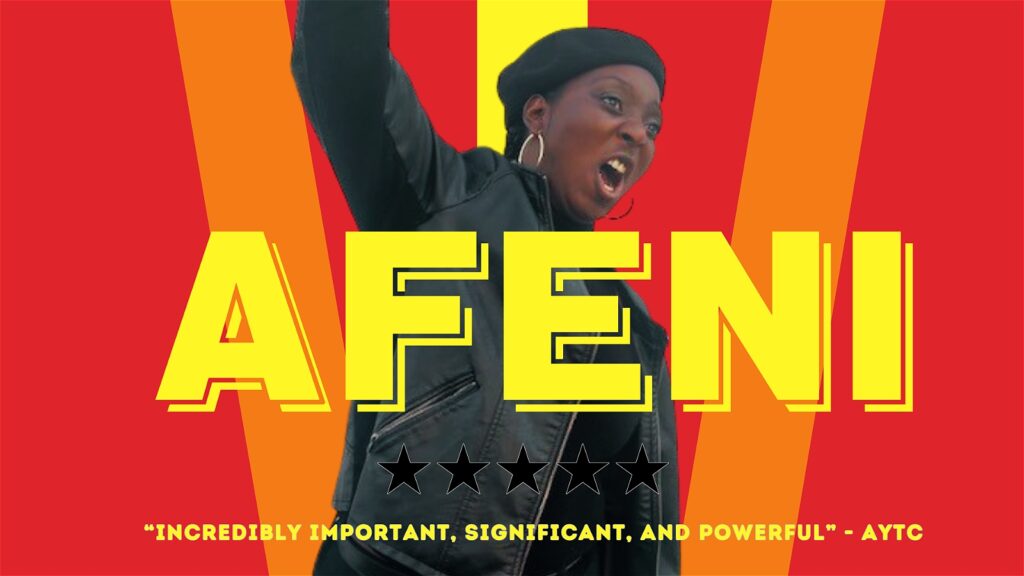
Afeni
Rating: A+
I love a good biography. There is something about stepping into someone else’s shoes and seeing the world through their eyes that feels so humbling, and I genuinely believe it helps us grow as people.
Full disclosure, though: before seeing Afeni, I had no idea who Afeni Shakur was. I didn’t even know she was Tupac’s mother, which, yes, I probably should have guessed from the last name. But I am very happy that I can no longer say that.
Written by beloved Fringe playwright Adam Bailey and starring Onika Henry, Afeni tells the story of an incredible woman: a Black Panther who fought the U.S. government on her own terms and won. And what a story it is.
This play is a successful demonstration of powerful storytelling. Henry, as Afeni, dives headfirst into the character. She is passionate, grounded, and incredibly well-spoken. This was a big theatre, and yet every word could be heard and every feeling could be felt. That, right there, is a true performer.
The production is also very simple. Literally, there is one chair on stage the entire time. And yes, that is a very Fringe concept, but in this case, the show does not need anything else. Bailey’s writing and Henry’s performance paint everything so beautifully for us that we do not have to work hard to imagine the world of the play. The images, the emotions, the people, and the stakes are all clear.
The stories are heartbreaking, but also incredibly empowering. Hearing about Afeni’s time in prison, her mistreatment because she was Black, and her decision to represent herself in court was deeply moving. She was facing an unimaginable amount of prison time, and instead of letting herself be silenced, she chose to use her own voice to fight and defend herself. If she was going down, she was going down swinging.
What I also appreciated was that the play did not present Afeni as some perfect, untouchable figure. We see different sides of her, including moments of weakness, complicated choices, and vulnerability. That made her feel more human, not less powerful. Henry also does a beautiful job bringing other characters into the story. Through changes in voice, posture, body language, and energy, she makes each person feel distinct without ever needing the stage to be crowded. It is simple, but very effective.
I really enjoyed Afeni. Onika Henry is a powerhouse performer, and Adam Bailey is an amazing writer. Together, they have created something moving, well-researched, and incredibly compelling. I know this show is going on tour, so if you have the ability to do so, I truly believe it is one to add to your list.
*****
Nostos
Rating: A
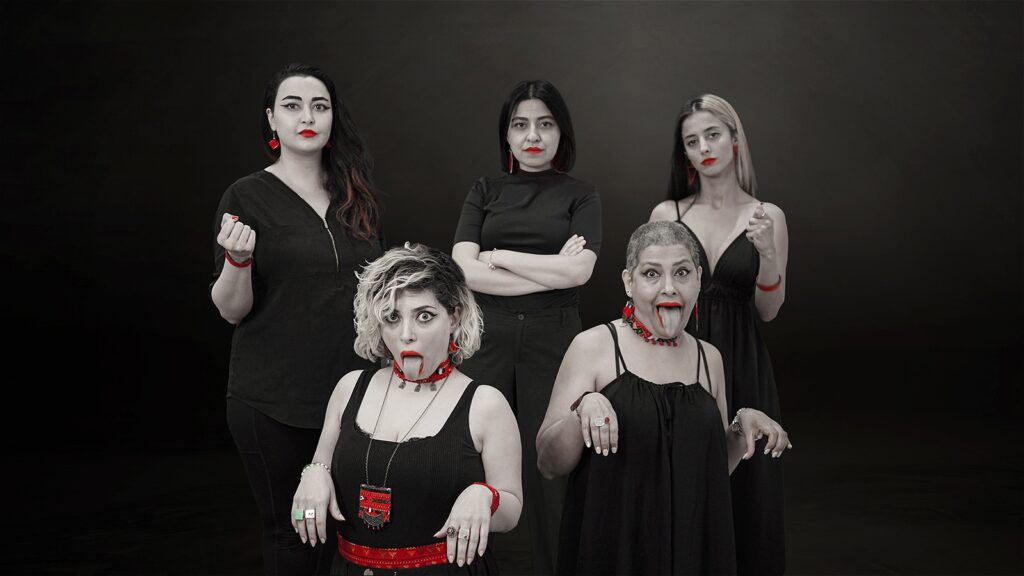
Nostos is a lot to take in, but I mean that in the best way possible.
Set in Toronto and shaped by displacement, political upheaval, diaspora, and the search for belonging, the play follows two sisters, two talking dogs, an humanoid android servant, and a makeshift dog-sitting business. That may sound like a lot of ingredients thrown into one pot, but somehow, Nostos finds a way to use fantasy, political commentary, and dark humour to explore something deeply human.
At the centre of the story is Beeta, an Iranian refugee living in Canada, who runs a dog-sitting business while also keeping her passion for dance alive by teaching online classes to women in Iran. When her sister Atousa comes to Toronto for what is supposed to be a short visit, the world around them shifts. A national uprising in Iran, political violence, digital blackouts, war, and divided opinions within the diaspora all begin to shape what was meant to be a simple visit between sisters.
What makes Nostos so powerful is how current and real it feels. The play is talking about issues that are actively dividing people, families, and communities. Even within the world of the play, the characters are divided about how they feel, what they believe, and what the right path forward should be. It explores faith in your culture, the need to stand up for what you believe in, and the cost of fighting for your rights when the stakes are impossibly high.
The performances are incredible across the board. A huge shout-out has to go to Mahsa Ershadifar and Aida Keikhaii, who play the dogs with full commitment. It could have easily felt silly or gimmicky, but they completely sell it. Their physicality, timing, and dedication to the roles bring so much life and humour to the production.
Tina Bararian’s spotlight dances were also beautiful. Those moments felt like pure emotion and expression, giving the show space to breathe and allowing us to feel what words could not always fully capture.
The set was beautifully elaborate, with shoes placed around the perimeter of the stage, creating a visual reminder of movement, migration, memory, and all the lives that have crossed borders and histories. The costume design was also outstanding, especially for the two dogs, helping bring the more fantastical elements of the show to life without taking away from the seriousness of the story.
The play also explored political divides, becoming even more intense in the play after Donald Trump and his administration bombed Iran, forcing the characters to confront where they stand and what they believe. Some see the bombing as a necessary intervention, while others see it as another devastating act of violence against people already fighting for freedom and survival. For those in the diaspora, the question becomes even more complicated. How do you support a revolution from afar? How do you fight for your people without supporting the destruction of your home? Nostos sits in that uncomfortable tension.
That said, there were moments where I wished the play had a little more nuance in how it delivered its ideas. There is a lot of information being shared, and to the production’s credit, it mostly stays on the right side of not becoming overwhelming. But every now and then, it did start to feel a bit like we were being lectured. Those were the moments where the dogs became especially important. They brought comedy, helped carry exposition, and broke the tension just enough to let the heavier ideas breathe.
Nostos is ambitious, political, strange, funny, emotional, and deeply human. It asks big questions about revolution, family, and what it means to live through history from far away. It is not just a play about political conflict. It is a play about the people caught inside it, the people watching from a distance, and the impossible choices that come with loving a place, a culture, and a family that are all in pain.
*****
CAMP!
Rating: A+
Crying to a musical starring an entire youth cast about summer camp was not on my Fringe Bingo card, but here we are.
CAMP! was easily one of my 2026 Fringe highlights.
The show follows Nova and August, who have been best friends since their first summer at Camp Clover. But something has shifted between the end of camp last year and the beginning of camp this year. Now, as seventeen-year-olds, they are not speaking, and even worse, they seem to have it out for each other. Through capture the flag, bonfires, camp songs, and the end-of-summer dance, CAMP! explores how friendships form, how they change, and how painful it can be when they start to fall apart.
What makes this show so impressive is that the cast is so young, and yet they are all stars. John Beer Principe, Kayla Morgan, Alicia Goncalves, Jordan Gurbin, Arabella Ho, Cameron Kuwayti, Elliot Metcalf, and Fern Wallenberg move through Nova and August’s final summer with so much brilliance, heart, and ease. Everything feels honest and earnest, and the performances are so beautifully delivered. It’s amazing, because I truly believe these kids are the next generation of Canadian musical theatre stars, and I feel lucky to see them perform so early in their careers!
The songs and lyrics by Ben Kopp are a feat in themselves. Like, top notch. They are fun, clever, emotional, and so specific to the world of summer camp. One of my favourite numbers happens during a game where the campers have to keep creating new verses to a camp song that basically never ends until one of the teams messes up the lyrics. The opposing team gives them a challenge, and they have to come up with a new verse on the spot. It leads to some genuinely hilarious moments and perfectly captures that silly, competitive, chaotic camp energy.
I never went to summer camp as a kid. My family couldn’t afford it, even though I really wanted to. And yet, somehow, this show still felt incredibly nostalgic. It made me think about childhood, about those carefree days when your friendships felt like your whole world, and about how devastating it can be when that world starts to shift. CAMP! is not just about summer camp, it’s about growing up, and how sometimes growing up means losing people you thought would always be there.
The choreography is amazing, and the direction is stellar. Yes, they are on a big stage, but there are also a lot of people in this cast, and they move around each other with confidence and ease. The props and set pieces are also really fun, helping build the world of Camp Clover without ever getting in the way of the story.
My only real issue with the show comes near the big reveal of why Nova and August have been at each other’s throats all summer. Without giving too much away, some of the emotional math did not fully add up for me. Their actions definitely could have led to awkwardness, hurt feelings, or discomfort, but I was not fully convinced that it would lead to the level of hatred and distrust we see between them. It is a small thing, but in a show this good, those small things stand out a little more.
And honestly, I only point that out because I really believe in this show. I want to see it again. I want to see it on another stage. I want to see it continue to grow.
CAMP! is a knockout. The cast is wonderful, the songs are fantastic, and the whole thing feels like such a heartfelt homage to summer camp, childhood, friendship, and the bittersweet reality of growing up. It is funny, silly, moving, and beautifully performed. I absolutely loved it.
*****

Seasons of Souls
Rating: A
The dance shows are really killing it in the Toronto Fringe this year, Seasons of Souls definitely being ranked highly on that list!
Rooted in contemporary ballet, the work places time at the centre of everything: how it passes, how it stretches, how it connects us, and how it can leave us feeling completely alone. From the very beginning with dancers interacting with digital shadows projected onto the screens, it was clear that this was a piece about our interaction with time, not just in the abstract, but in our memories, losses, and moments of connection and disconnection.
Choreographed by Sydney Keir, the piece is dynamic, athletic, and visually striking. The dancers are incredibly talented, and their synchronicity was seriously impressive. There were so many moments where, if even one dancer had been slightly out of sync, the whole image would have fallen apart. But they stayed completely locked in, moving with precision, passion, and such clear intention.
What I also really appreciated was how even the non-dance movements felt choreographed. Breath, stillness, repetition, and small physical gestures all had purpose. The piece moved beautifully between urgency and calm, tension and release, stillness and motion. It felt like the dancers were not just performing choreography, but physically carrying the weight of time itself.
The lifts and tosses were done with so much ease and confidence, which made them even more effective. There were also some really beautiful solo, duet, and trio moments throughout, giving individual dancers space to shine while still serving the larger emotional arc of the piece.
But for me, the full company sections were especially powerful. When everyone was on stage together, the movement became almost like a cascading waterfall. Everywhere you looked, there was flow, energy, and connection. It was expansive and intimate at the same time, which is not easy to achieve.
Seasons of Souls takes the audience through a real emotional journey. You can feel how passionate the performers are and how committed they are to communicating the theme of the piece. It asks us to think about how we spend our time, what we hold onto, what we lose, and whether we ever truly feel like we have enough. It is a stunning, heartfelt, and beautifully performed work that reminds us how much can be said through movement alone.
*****
I Belong Here
Rating: A
I really admire those who chase their dreams. I often wonder what dreams I have, and if my current ones will get to be embedded into the reality of my life. But we do so many dreams die? Honestly, it’s because they’re hard. The journey is tough, and the path is never linear, and life omehow finds a way to swoop in and throw several wrenches in the plan. I Belong Here is a beautiful tribute to that path, and how one woman was going to stop at nothing until her dreams came true.
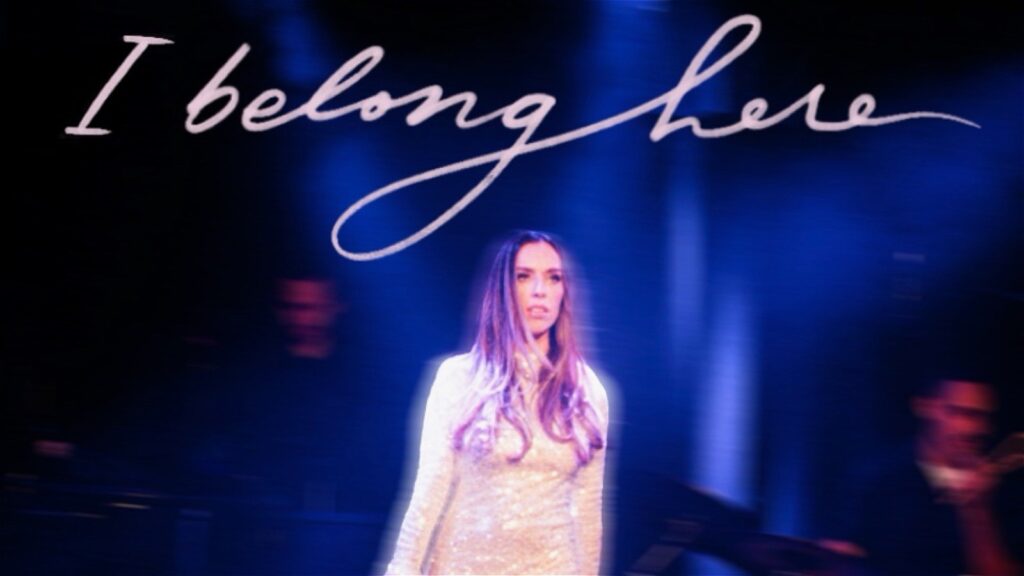
At 26, Lily Librach was living her dream when a virus attacked her vocal cords and left her unable to speak, let alone sing. For someone whose life has been so deeply shaped by performing and musical theatre, that kind of loss is unimaginable. Through stories, humour, and music, Librach takes us from childhood to the present, sharing how she first discovered her voice, how she lost it, and how she is learning to reclaim it.
First things first: Lily Librach has an amazing voice. Truly. It is clean, operatic, dramatic, and powerful, but she is also able to bring in quieter, more delicate moments when needed. Her vocal quality actually reminded me a lot of Kristin Chenoweth, which is very much a compliment. And honestly, considering how incredible her voice is, I am surprised she has not blown up on Broadway yet.
The show touches on so many moments in her life, from being a child and getting into an accident on the way to New York, to moving there and trying to make it as a performer while her family remained in Toronto, to losing her voice just last year. It is very much a show for performers, especially those of us who understand the constant pressure of trying to be enough. More pretty, more ugly, more humble, more confident, louder, softer, stronger, more vulnerable. So many contradictions, all somehow expected to live inside one person.
As a performer myself, I really resonated with a lot of what she was saying. The show speaks to the highs and lows of chasing a dream, including the heartbreak of finally getting a major opportunity only to have it taken away before opening night because of COVID. So many performers experienced that, and it is a very specific kind of grief.
I also appreciated how honest Librach is about the emotional toll of this life. One-person shows are hard because you have to make people care. Everyone in the audience has their own struggles, so inviting us into your personal story means making it feel specific enough to be yours, but universal enough for us to connect to. For the most part, she does that well. Her journey of wanting so badly to make her dreams come true is easy to understand.
That said, there were moments where the spoken text did not always feel as emotionally alive as the music. I do not mean that her voice itself was monotone, because it is definitely dynamic, but some lines felt a little too rehearsed in their delivery. In those moments, it read more like she was presenting a polished show about her life rather than actively telling us her story. It is not a huge issue, but it did sometimes take away from the immediacy and believability of the piece.
I also found myself sitting with the show’s relationship to struggle and privilege. Librach is clearly hardworking, talented, and has been through very real pain, especially with the loss of her voice among other losses in her life. At the same time, there are moments where the story hints at a certain level of privilege and support, and that is hard to fully ignore, especially since I couldn’t help comparing my life path and my own journey through performing alongside hers. That does not invalidate her journey at all, but I think acknowledging that complexity a bit more could have made the piece even stronger.
But when all is said and done, I Belong Here is a moving and beautifully sung show about losing your voice, finding your way back to yourself, and realizing that maybe your true voice was there all along. Lily Librach is an extraordinary vocalist, and her story will especially resonate with anyone who has ever chased a dream, questioned where they belong, or had to rebuild after life took an unexpected turn.
*****
Little Eden
Rating: A+
The concepts of life, time, and death are ones that I often explore on my own. Though there are MANY movies, plays, songs, books, and more that talk about this topic, it’s exciting to me when someone presents a fresh take on the aforementioned subjects. Little Eden was, for me, an incredibly beautiful, and poetic way to talk about these topics meaningfully.
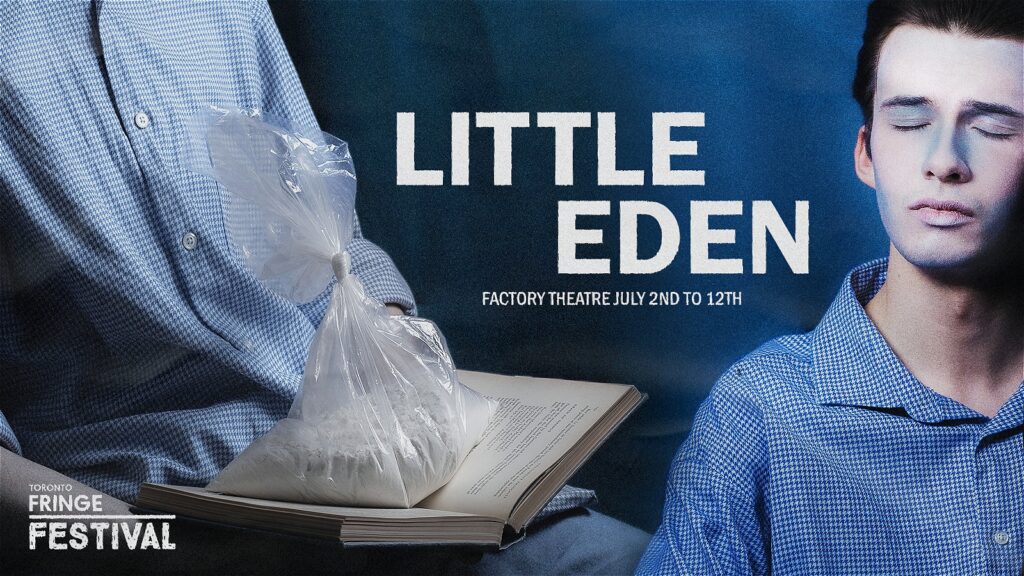
Written and performed by Charles Ford, with music composed by Jesse Sol, lighting by Olivia Tsoi, and direction by Kenneth Gray, the play follows Gabriel as he wakes up in the middle of the night trapped in the house of his deceased grandfather. From there, he moves through what feels like a series of waking nightmares, memories, questions, and reflections about life, death, grief, family, and whatever might exist beyond.This play has its core talking about the memories and feelings we leave behind, and the way we hold onto and honour the past.
Ford delivers the entire piece alongside a continuous track, which is honestly incredible. His timing has to be so precise, and it is. I kept thinking about how difficult this must have been to rehearse, not only as a performer, but also in terms of the music, sound, and structure of the whole piece. Everything has to line up, and he makes it feel effortless.
Visually, there is something really interesting happening too. Ford’s face is painted grey, but depending on the lighting, sometimes it looks like there is no paint on his face at all. Other times, he looks ghostly, almost dead. That ambiguity works so well because, as an audience, we are constantly wondering: is Gabriel dead? Is he a ghost reflecting on his life? Is he trapped in his grandfather’s apartment? Or is all of this something more symbolic?
The writing is absolutely beautiful. It is poetic, flowery, and full of movement, but it still has impact. The whole piece almost feels like one long string of thought, flowing in and out of memories, dreams, and fears. On a surface level, it could read as random or all over the place, but because the writing is so strong and Ford delivers it with such honesty and ease, it becomes really compelling to watch.
There is also a real innocence to Gabriel. The way he thinks about his family, dreams about them, and tries to make sense of the world gives the piece a tenderness that I really appreciated. To me, Little Eden feels like a play about grief, about what we remember, what we hold onto, and what parts of people stay with us after they are gone.
The set design is simple but effective: cardboard boxes, a mattress on the floor, and just enough visual information to create the feeling of a space filled with memory. The lighting also does a lot of beautiful work, especially in how it transforms Gabriel from moment to moment. The lighting also creates the atmosphere, and the illusion of ‘ghosts’ in the room.
My only real technical note is that the music was a little too loud at times. Ford does an amazing job projecting across the theatre, but because the track runs throughout the whole piece, I think it could have been just a touch quieter to let the text land even more clearly.
One of the most impressive moments actually came from something unplanned. At one point, noise from the theatre above travelled into our space, and Ford reacted to it instantly, folding it into his monologue without missing a beat. That kind of presence and control is not easy, and it showed just how locked in he was as a performer.
Little Eden is beautifully written, honestly performed, and full of haunting, poetic imagery. Charles Ford is an incredible performer and writer, and I am genuinely excited to see what he does next.
*****
Olivia O, The Musical
Rating: B+
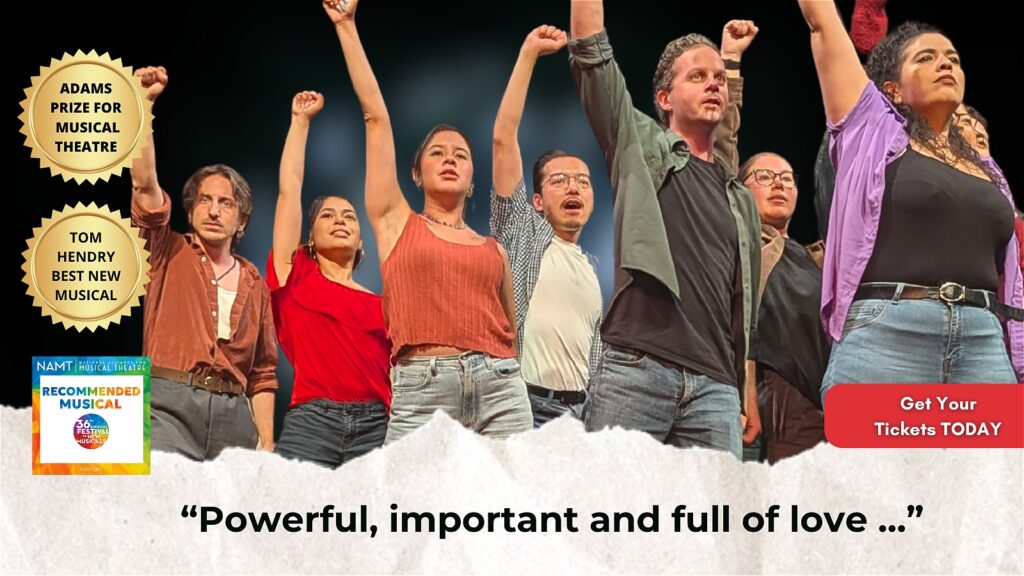
Olivia O, this year’s Adams Prize for Musical Theatre winner, is a very timely piece of theatre. The musical follows Olivia Ortiz, a 14-year-old undocumented immigrant who is separated from her mother at the U.S.-Mexico border. As Olivia tries to survive the heartbreak and fear of being placed in an unfamiliar system, her aunt works to build a community of activism in the hopes of finding her and reuniting families separated by cruel immigration policies.
Let me start by saying this: the performers in this show were great. They may not all be the most polished in terms of technique, and there are certainly some rough edges, but there is so much heart on that stage. I really commend the cast for the work they put into this piece, especially the actor playing Olivia, who brings a lot of sincerity and emotional weight to the role.
Technically, though, the show struggled. Because the performers were not miked, it was often hard to hear and understand everyone, especially with live keyboard and percussion accompanying the songs. The musicians were really good, and the music itself had a lot of power. But without microphones, the balance made it difficult for the lyrics and dialogue to land clearly, and therefore the full impact of the songs is lost on us.
The songs themselves are really strong. They feel like proper musical theatre songs: uplifting, emotional, and thematically connected to the story. They do a good job of telling us who these characters are while also speaking to the larger community being affected by these policies. You can absolutely understand why this show won the prize. The subject matter is current, heartbreaking, and deeply relevant, especially with everything happening in the United States right now around immigration, detention, and families being separated. Pair that story with the incredible songs, and you’ve got a winning combo.
That said, the story itself feels quite dense. There is a lot happening, and not all of it feels fully earned yet. For example, there is a love story between Olivia’s aunt and one of the people involved in the organization trying to help her, but it comes out of nowhere and does not feel as developed as it could be. I also was taken out of the story and the plight of Olivia to have this story of a budding romance presented to us. It was not necessary, and it might have been nice to see two adults just help each other without the hope of romance on the other end of te situation. There are also moments where the emotional reactions do not feel big enough for what is happening. With material this heavy, the actors need to really dial into the emotional stakes and take those moments to the next level.
Even though Olivia O has a lot of heart, it still feels unfinished. I actually think this piece wants to be a full two-act musical, staged on a larger scale with the time and space to let the story breathe. The foundation is strong, but the script needs a deeper rewrite and a closer look at what it wants to focus on.
Most importantly, I wanted more Olivia. The show is called Olivia O, and while the aunt’s journey and the activism surrounding Olivia’s disappearance are important, I think Olivia herself needs to be more centred. We spend a lot of time with the adults trying to help her, which matters, but the emotional core should really belong to Olivia and her experience.
Olivia O is an ambitious, heartfelt, and important new musical with beautiful songs and a talented cast. It may not be fully there yet, but there is something powerful at its centre. With more development, stronger focus, and a production that allows the performers to be properly heard, I think this piece could become something truly impactful.
*****

Catching a Cheese Pervert: A Priscilla Patton Mystery
Rating: B+
Catching a Cheese Pervert: A Priscilla Patton Mystery is exactly as ridiculous as it sounds, and yes, is very cheesy.
The show follows Priscilla Patton, Canada’s favourite dairy heiress and most prominent anti-vegan influencer over 40, as she tries to find out who is flashing women in Northern Ontario with cheese covering his crotch before dairy’s most important event of the year: The Butter Ball. Yes, that is the plot. And yes, regrettably, it is apparently inspired by true events. What’s even more hilarious to me is that this very Canadian show was written by two Americans, Kayla Kurin and Krista Rowe.
This is a lighthearted, silly, and very fun Fringe show that knows exactly what it is trying to be. It is not here to change your life or leave you emotionally devastated. It is here to give you a strange little mystery, some very committed performances, and a whole lot of dairy-based chaos. And even for someone like myself who is a vegetarian turning vegan slowly but surely, I found the show to be super fun, well rehearsed, and delivered with ease.
Arleigh Curran is great as Priscilla Patton, fully embracing the absurdity of this character and the world around her. Jose Andres Bordas also deserves a huge shout-out for basically playing everyone else in town, everyone on the internet, and, somehow, Priscilla’s dad and mom. The two performers really go full out, which is exactly what a show like this needs.
There is also some fun and clever use of puppetry, and while the set is quite simple, it is effective. Nothing feels overcomplicated, and that works in the show’s favour. It keeps the focus on the comedy, the characters, and the complete weirdness of the situation.
Catching a Cheese Pervert feels like a proper Fringe show in the best way. It is odd, playful, low-stakes, and fully committed to its own ridiculous premise. Not every show needs to be profound. Sometimes, it is enough to sit in a theatre, watch something deeply silly, laugh at some stupid and ridiculous moments, and just enjoy the experience. And honestly, this show does exactly that.
*****

Our Lady of Wayward Sissies
Rating: A
When I first walked into Our Lady of Wayward Sissies, I genuinely thought I had made a huge mistake.
The show begins with an aging, gender non-conforming person awaiting execution for the crime of genderbending. They have been imprisoned and are set to be electrocuted because they refused, or perhaps simply could not, express their gender in the way society expected them to. Very quickly, the audience is thrown into a world of clown, memory, ritual, hallucination, and some deeply uncomfortable physical comedy. There is, for example, a scene involving loud, uncontrollable diarrhea and a newspaper being used as toilet paper. In that moment, I thought, “Oh no. I have made a terrible choice.”
But I was in it for the ride. And I am so glad I stayed on that ride.
What slowly revealed itself was a strange, poetic, unsettling, and surprisingly beautiful exploration of gender expression, shame, queerness, and what it means to grow up being labelled as a “sissy.” The show looks at how family, friends, religion, and society can mark you as different before you even have the language to understand yourself. All this character wants is to exist honestly, to express themselves freely, and to be seen as human.
The world of the play feels unjust by design. The people imprisoning this character are clearly operating from conservative values, turning gender expression into a crime and difference into something worthy of punishment. It is absurd, yes, but it also does not feel as far away from our current world as we might want it to. The show touches on issues that are very present right now, especially around gender, religion, and who gets to decide how someone else should live. And honestly, as someone who believes God has bigger things to worry about, I found that part especially resonant.
Chris Behnisch plays the character in a way that is sad, strange, funny, and deeply human. There is something almost haunting about watching someone who has clearly been mocked, shamed, and discarded still try to hold onto themselves. At times, it reminded me of old videos of celebrities like Courtney Love, where people once laughed at someone falling apart, but looking back now, all you can see is a person suffering while the world treats them like garbage. That same feeling runs through this show. You may laugh, but underneath the laughter is pain. But underneath the pain is hope, and love.
What I appreciated most is that Our Lady of Wayward Sissies is ultimately about claiming the names and labels that were once used against you. It is about having no regrets about who you are, especially when the world has tried so hard to make you feel ashamed. It also explores love, and what love looks like for people who are queer, gender non-conforming, or simply trying to understand where they fit in a world that keeps demanding they choose a box.
This is a very well-rehearsed piece, and even when it is messy or bizarre on the surface, there is clearly intention behind it. There is a lot happening, and not all of it is easy to sit with, but that discomfort feels purposeful.
And honestly, this is the beauty of Fringe. Sometimes you walk into a show thinking it might be one of the worst choices you have ever made, and then you walk out feeling lighter, moved, and a little changed.
Our Lady of Wayward Sissies is weird, bold, uncomfortable, poetic, and far more affecting than I expected. It fully caught me off guard, and by the end, I was really impressed by what I had seen.
*****
The First Vampire
Rating: B
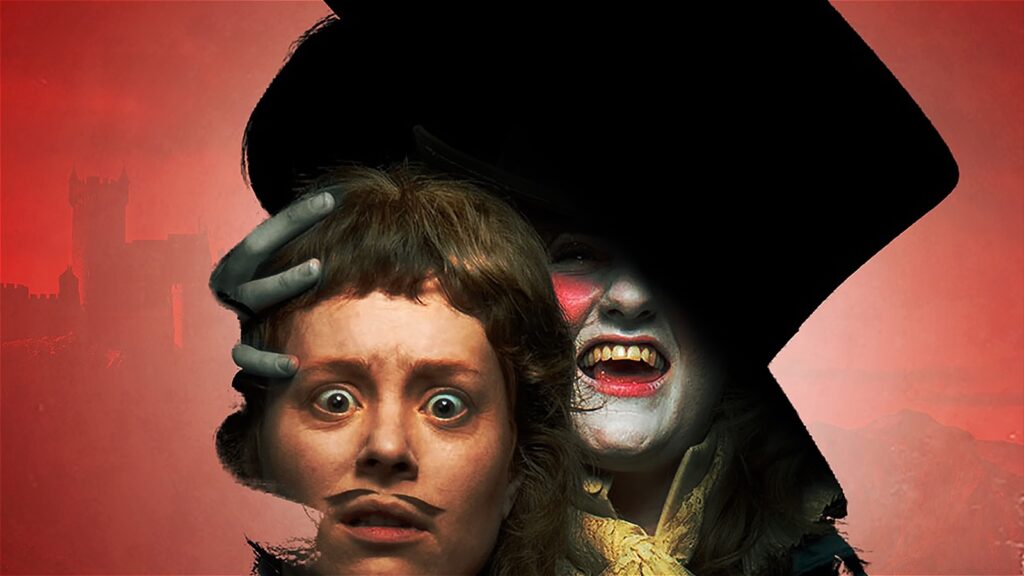
The First Vampire is a well-rehearsed and well delivered two-hander written and directed by Ryan Gladstone. The play looks at the complicated relationship between Lord Byron, played by Madeleine Humeny, and Dr. John Polidori, played by Rebecca Wass, while also staging scenes from The Vampyre, the first vampire novel, written by Polidori but famously misattributed to Byron.
What I really appreciated right away was the simplicity of the set. It worked beautifully for the production, especially because it also doubled as screens for shadow puppet projections. Those moments were used to tell parts of Mary Shelley’s Frankenstein story, which makes sense given the famous Geneva ghost story competition that helped inspire both Frankenstein and The Vampyre. It was a clever and effective theatrical choice.
Throughout the show, we see the complicated dynamic between Byron and Polidori woven together with scenes from The Vampyre. The performers are clearly talented and do a strong job embodying their characters. You can tell they are working hard to bring out the humour, tension, and drama in the relationship, while also keeping the storytelling moving.
That said, the plot just felt slow at times, and there were elements that just didn’t work. There were some loud screams and bangs, especially from the Lord Byron character, that felt bigger than necessary. I understand that the character is meant to be confronting certain truths, memories, or realizations, but in those moments, the volume felt more distracting than impactful.
I also found that some of the humour did not quite land. The performers were definitely committed and trying to make the funny moments work, but a number of the jokes just did not hit in the way I think they were intended to.
I will also admit that my expectations may have affected how I experienced the show. I thought The First Vampire would focus more directly on the telling of The Vampyre itself. Instead, the play spends a lot of time exploring the relationship between Lord Byron and John Polidori. That is not a bad thing at all, but it was not quite the show I expected going in.
However, The First Vampire is a polished and thoughtfully staged production with two strong performers and some really clever visual storytelling. While not every moment landed for me, I appreciated the ambition of the piece and the way it explored authorship, ego, legacy, and the strange history behind one of literature’s earliest vampires.
[Reviews by Shan Fernando]
Toronto Fringe Festival runs from June 30th- July 12th, 2026
Tickets can be purchased here