
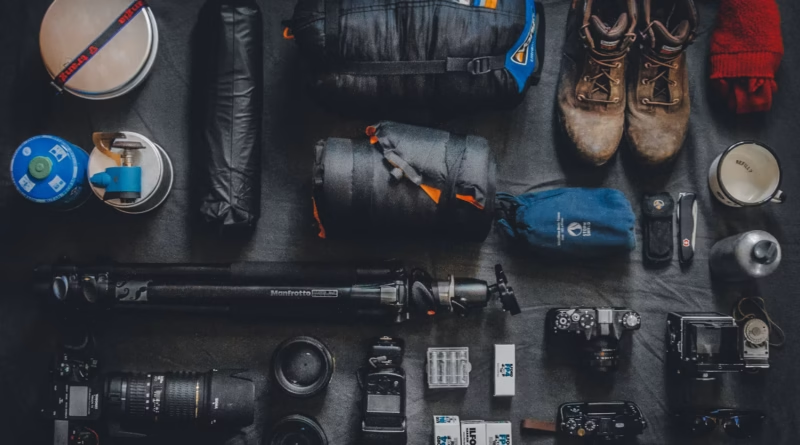
How to Build a Practical Mobile Tech Kit for Travel and Adventure
Staying connected while you travel has become a must-have. Our phones are our maps, boarding passes, cameras, and our lifeline back home. That means a dependable mobile tech kit is now a key part of any packing list, whether you’re off to a new city or deep in the wilderness. It keeps you powered when you need it, protects your devices from the weather, and keeps everything organized, so you’re not digging through a tangled mess of cables at the bottom of your bag.
Start with the Core: Power and Connectivity
Before you even think about gadgets, you’ve got to sort out your power situation. A dead phone is just a fancy paperweight, right? The most important piece of any tech kit is a reliable portable power bank. Look for one with at least 10,000mAh to charge a modern smartphone two or three times. For longer trips where you’ll be off-grid, consider a 20,000mAh model.
Next up is a universal travel adapter. Instead of lugging around a bunch of different plugs, grab an all-in-one adapter that works in most countries. Many modern ones also include multiple USB-A and USB-C ports so that you can charge your phone, power bank, and another device from one wall outlet. Finally, pack the right cables. Bring a main cable and a backup for your most important device, and consider shorter cables (around 30 cm) to keep things tidy when you’re charging from your power bank on the go.
Protecting Your Lifeline: Cases and Carry Solutions
Your phone is probably your most valuable piece of travel gear, so keeping it safe matters. A strong, shock-absorbing case is the absolute minimum. For adventure travel, look for cases that can handle water and dust. But protection also means easy access. When you’re following a trail or need to check a map quickly, you don’t want your phone buried deep in your backpack.
For hands-free access on a hike or during an adventure sport, a special holder like a MOLLE phone mount can clip your device securely to a backpack strap or vest. This keeps it both safe and easy to reach. It’s useful for activities where you need your hands free but your screen visible for directions or talking to people. This way, your most important tool is ready for action without you worrying about dropping it.
Choosing Your Essential Gadgets
Once you’ve sorted power and protection, you can decide which devices to bring. The key here is to keep it simple. Every item should have a clear job. Besides your smartphone, think about what will truly improve your trip. For many, a good pair of noise-cancelling headphones is essential for long flights or bus rides.
An e-reader is another fantastic addition, as it gives you access to tons of books in one light package with a battery that lasts for weeks. This really helps cut down on physical weight and bulk. If you’re trying to figure out what’s really necessary, checking out examples of a lightweight travel tech kit can give you great ideas for smart packing. Remember, the goal is to support your journey, not weigh you down with gadgets.
Keeping It All Organized
A jumble of chargers, cables, and adapters at the bottom of your bag is just annoying and inefficient. This is where a dedicated organizer comes in handy. A simple set of Velcro cable ties can do wonders for taming your cords, but a purpose-built electronics organizer takes it further. These come in all sorts of shapes and sizes, from small rolls to zippered pouches.
Getting a good-quality tech pouch means every item has its own spot. Look for one with a mix of zippered pockets, elastic loops, and dividers to hold everything from your power bank and wall charger to tiny memory cards and adapters. When you get to your hotel or campsite, you can just pull out one pouch and have your whole tech setup ready to go.
Bonus Items for the Serious Adventurer
For those whose travels take them way off the beaten path, a few extra tech bits might be worth the space. A portable solar panel can be a lifesaver on multi-day treks, letting you recharge your power bank just using sunlight. If you’re heading into areas with no phone service, a dedicated satellite messenger or personal locator beacon (PLB) offers a reliable way to call for help in an emergency. These devices are specialized, but they can be especially important for safety in remote places.
With your practical tech kit all put together, you’re ready to focus on the adventure ahead, knowing you’ve got the tools to stay connected, powered up, and on track.