
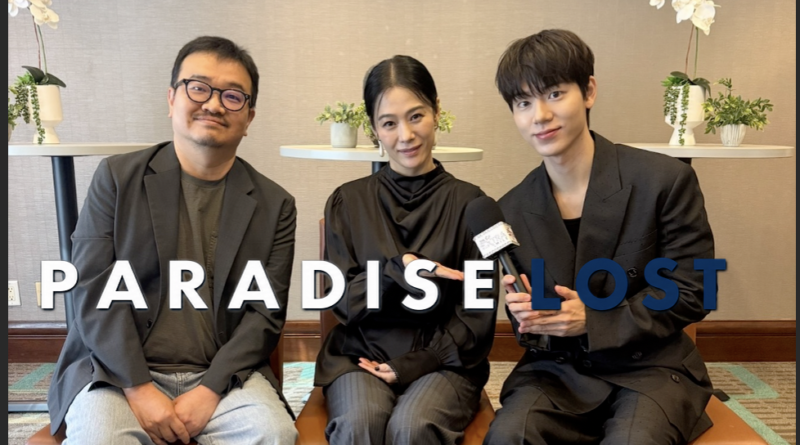
Paradise Lost Interview: Yeon Sang-ho, Kim Hyun-joo and Bae hyeon seong
What makes us human in a world where technology can recreate our memories and the people we love? That’s one of the central questions behind Paradise Lost (2026), the Korean science-fiction thriller directed by Yeon Sang-ho. At the Toronto International Film Festival (TIFF), The Extra Mile sat down with director Yeon Sang-ho and stars Kim Hyun-joo and Bae Hyun-sung to discuss the inspiration behind Paradise Lost, the emotional challenges of portraying its characters, and how the film has influenced their perspectives on life and filmmaking. From John Milton’s literary classic to the relationship between technology and human emotion, the cast and director offered insight into the themes that make Paradise Lost more than a conventional science-fiction thriller.
Yeon Sang-ho Explains the Inspiration Behind Paradise Lost
Director Yeon Sang-ho, known for Train to Busan and Hellbound, revealed that the initial inspiration for Paradise Lost came from John Milton’s epic poem of the same name. He was interested in exploring how the story’s themes could be reinterpreted in a contemporary setting. In Milton’s Paradise Lost, humanity is expelled from paradise following temptation. Yeon reflected on how that expulsion, and the imperfections that followed, contributed to the formation of human identity. Rather than creating a direct adaptation, he wanted to explore those philosophical ideas through a realistic, modern narrative. This eventually led to the film’s central concept involving a son recreated through technology and memory. The premise raises questions about perfection, identity, and what separates a technologically reconstructed person from a human being. For Yeon, the story offered an opportunity to explore the complicated relationship between human imperfection and the increasingly sophisticated capabilities of technology.
Bae Hyeon Seong on Taking on a Darker Role in Paradise Lost
For actor Bae Hyeon- Seong, Paradise Lost represented an opportunity to explore a different side of his acting abilities. During the interview, Bae explained that he was intrigued by the darker nature of the screenplay. Having previously portrayed characters with brighter and kinder personalities, he was eager to challenge himself with something different. The film offered him an opportunity to move beyond the types of characters audiences had become familiar with and explore a more emotionally complex performance. Bae expressed excitement about showing audiences new sides of himself through the project. His experience reflects one of the recurring themes throughout the interview: the importance of challenging personal and professional limitations.
Kim Hyun-joo on Working With Director Yeon Sang-ho
Kim Hyun-joo also reflected on her experience collaborating with Yeon Sang-ho. According to Kim, the director has a unique ability to help actors discover qualities within themselves that they may not have previously recognized.S he explained that working with him often pushes her beyond her perceived limitations, encouraging her to take on challenges that ultimately contribute to her growth as an actress. While the process can be demanding, Kim believes these experiences have helped her develop professionally.
For Paradise Lost, the emotional intensity of her character presented a particularly significant challenge.
Kim described the role as emotionally exhausting and emphasized the effort required to portray those emotions realistically. Rather than simply delivering a dramatic performance, she wanted the character’s feelings and experiences to appear authentic.
Kim Hyun-joo on the Emotional Impact of Watching Paradise Lost
One of the most personal moments of the interview came when Kim Hyun-joo discussed watching the completed film. Although approximately ten months had passed since filming, Kim admitted that she hadn’t entirely moved on from the character. After working on other projects, she initially believed she had put the experience behind her. However, watching Paradise Lost again brought her back to the emotions she experienced during production. She described feeling an ache in her heart as memories of filming resurfaced.Kim also reflected on the contrast between the enjoyable moments shared on set and the emotional weight of the characters’ experiences. Seeing Bae Hyun-sung again through the context of the completed film changed the way she viewed him, leaving her with a sense of tenderness and sadness.Her response illustrated how deeply the film’s story and characters had stayed with her, even after production ended.
How the Cast Moves On From Emotionally Demanding Roles
The conversation also explored how actors separate themselves from emotionally intense characters after filming. When asked about moving on from difficult roles, the cast offered different perspectives. One response suggested that there isn’t necessarily a specific technique for leaving a character behind. Sometimes, the only option is to accept the experience and embrace the emotions that come with it. Another perspective focused on allowing the character to fade naturally over time rather than deliberately forcing that separation. The discussion became more playful when the question arose of whether actors should try to move on more quickly from particularly dark roles. The response acknowledged that while moving on can be important, there are also valuable experiences and emotions worth carrying forward.
Yeon Sang-ho on Human Empathy and the Limits of Technology
One of the most compelling parts of the interview centered on the film’s ending and the motivations behind a character’s final decision. Yeon Sang-ho explained that the film does not necessarily provide a complete explanation for the character’s choice. Instead, he hopes audiences can understand the decision through their emotional connection to the character. He suggested that empathy allows people to recognize the depths of another person’s experiences, even when those experiences cannot be fully explained through logic. This idea connects directly to the film’s larger exploration of technology and humanity. While technology may be capable of recreating memories or producing seemingly perfect representations of people, Yeon believes there are aspects of human understanding that cannot be explained by technology alone. The ability to empathize with another person’s pain, choices, and emotional complexity becomes an important part of that distinction. Through Paradise Lost, Yeon hopes viewers will experience that sense of empathy rather than simply searching for logical answers to every decision made in the film.
Why Paradise Lost Represents Creative Freedom for Yeon Sang-ho
Beyond the film’s philosophical themes, Yeon Sang-ho also reflected on how his filmmaking approach has evolved. Having worked in animation, live-action projects, and larger commercial productions, the director explained that his recent experiences with lower-budget filmmaking have changed his perspective.He discussed discovering a renewed sense of enjoyment and purpose through smaller productions.That experience helped give him the confidence to approach Paradise Lost with a different creative mindset. Presenting the film at festivals and connecting with audiences also allowed him to reconsider some of the expectations and creative frameworks that had shaped his previous work.Yeon described the experience as an opportunity to move beyond the labels and limitations that had defined him as a filmmaker.As a result, he now approaches his work with a greater sense of freedom. Rather than feeling restricted by expectations surrounding his previous projects, he has found renewed enjoyment in the creative process.
Kim Hyun-joo on Living in the Moment Instead of Following a Life Plan
As the interview moved toward its conclusion, the conversation shifted from filmmaking to personal philosophies and future aspirations. Kim Hyun-joo shared that she doesn’t necessarily approach life with a detailed long-term plan. While she recognizes the importance of having goals, she prefers to focus on enjoying individual moments and appreciating the opportunities that come her way. She reflected on how attending the Toronto International Film Festival was something she had never imagined would happen.By concentrating on each experience rather than following a rigid plan, she found herself in a position she hadn’t previously anticipated. For Kim, the goal is to continue living sincerely, working hard, and enjoying the present.She also emphasized the distinction between her identity as an actress and who she is as a person.Rather than focusing exclusively on professional success, Kim spends considerable time thinking about how she can build a happier and more peaceful personal life.Her reflections connected with the film’s broader themes of identity, humanity, and the values that influence our decisions.
Bae Hyun-sung on Becoming a Better Actor and Person
Bae Hyun-sung shared a similar perspective on personal growth. Reflecting on his experience with Paradise Lost, he discussed how the project had helped him develop as an actor.Attending an international film festival for the first time also broadened his perspective on the world.Like Kim Hyun-joo, Bae explained that he isn’t someone who necessarily follows a highly detailed life plan.Instead, he hopes that by continuing to work hard and embracing new experiences, he can gradually become both a better person and a better actor.His comments reinforced the importance of growth, curiosity, and remaining open to unexpected opportunities.
Paradise Lost Explores What It Means to Be Human
Throughout our conversation with Yeon Sang-ho, Kim Hyun-joo, and Bae Hyun-sung, one theme consistently emerged: the importance of understanding humanity beyond logic, perfection, and technology. For Yeon, Paradise Lost explores the relationship between human imperfection and identity. For Kim, the project became an emotionally demanding experience that challenged her abilities and stayed with her long after filming.For Bae, it offered an opportunity to explore a darker character and discover new possibilities as a performer.Together, their reflections highlight the personal and philosophical questions at the heart of the film.As technology continues to reshape how we understand memory, identity, and human connection, Paradise Lost asks audiences to consider whether the qualities that make us imperfect may also be the qualities that make us human.
Watch the trailer for Paradise Lost below
Well GO USA Entertainment releases Paradise Lost in theatres Nov 6th, 2026